Time for a trip
After spending a 7 months lockdown period in the holy city of Varanasi – an intense but worthwhile experience we wouldn’t want to have missed! -, we very much needed some nature around.
Travelling to the state of Uttarakhand – bordering the Himalayas and meaning ‘Northern land’ in Hindi, – seemed a good option and next destination for that.
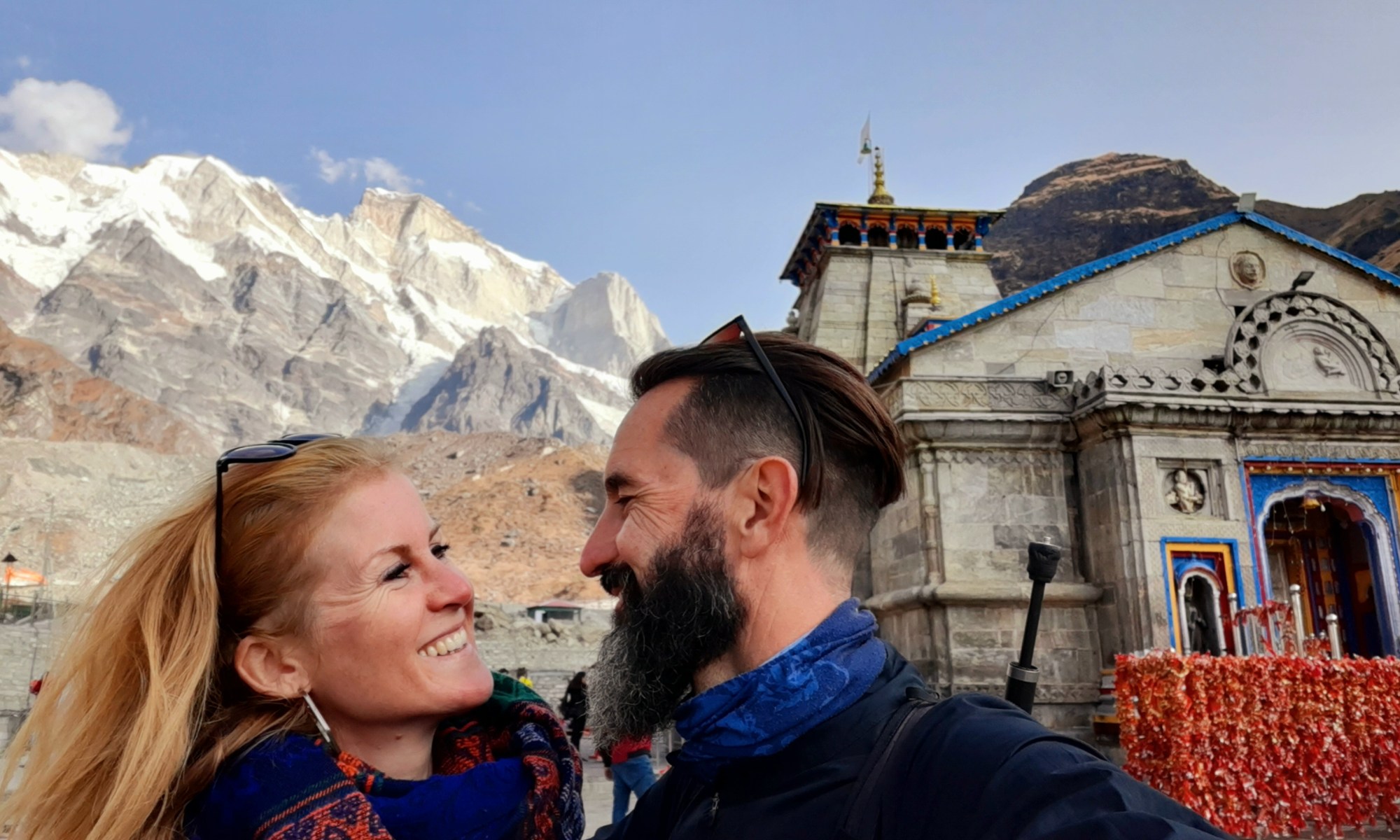
While we were there, we also decided to visit Kedarnath, a sacred site for Hindus. You might get some inspiration from our travel itinerary below!
Kedarnath, part of a religious circuit
From Rishikesh you can relatively ‘easy’ reach this holy Hindu place and it’s Shiva Temple at a distance of 223 kilometres.
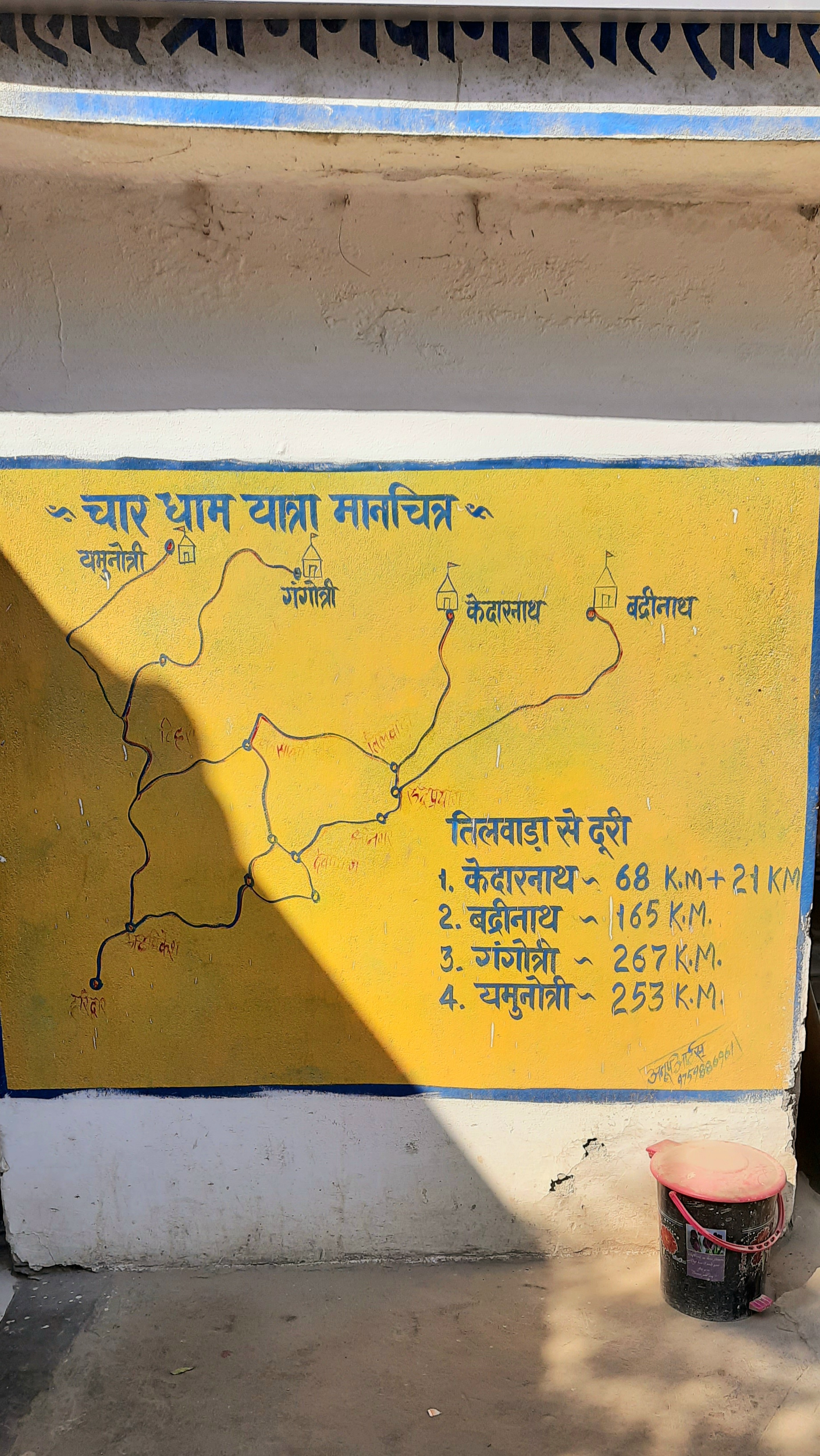
Chota Char Dham? The Kedarnath Temple is 1 of the 4 important pilgrimage sites of the northern Himalayas. Together with the other 3 destinations Badrinath, Gangotri and Yamunotri, this religious circuit is called Chota Char Dham, literally meaning 'the small 4 abodes / seats'.(Source: Kedarnathtemple.com)
Because of the special location – situated at an elevation of 1.982 meters above sea level – the temple is not directly accessible by road though, and it can only be reached by an uphill trek. Due to the extreme weather conditions, the Kedarnath Temple furthermore is only open for visitors between April till November.*
Since it was already the end of October, we decided to try our luck and go on the adventure: renting an Avenger, and going on a bike trip to make the hike up.
Day 1 – Rishikesh to Rudraprayag
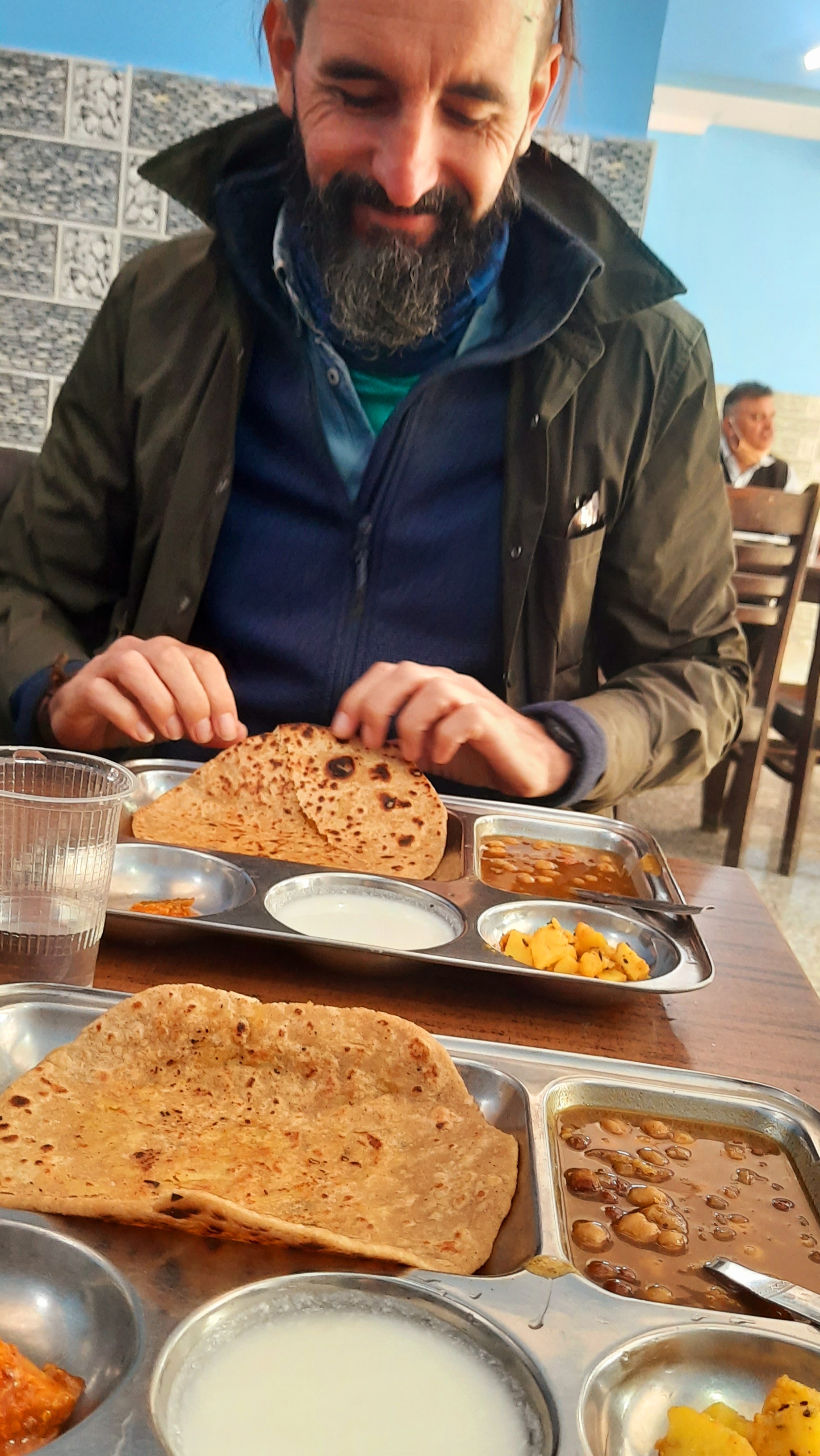
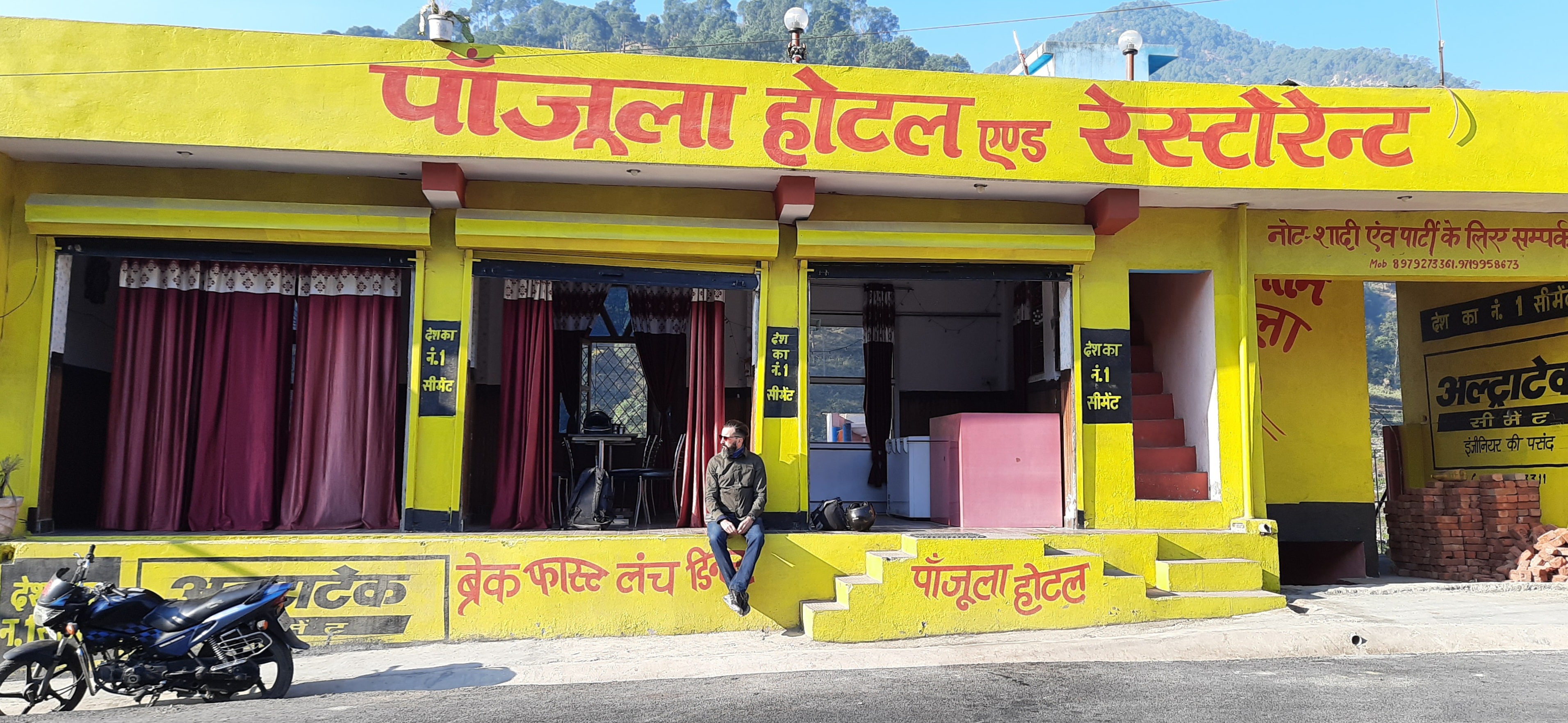
On day 1 we left early in the morning and the first stop was, of course, breakfast at one of the local dhabas (roadside restaurants).
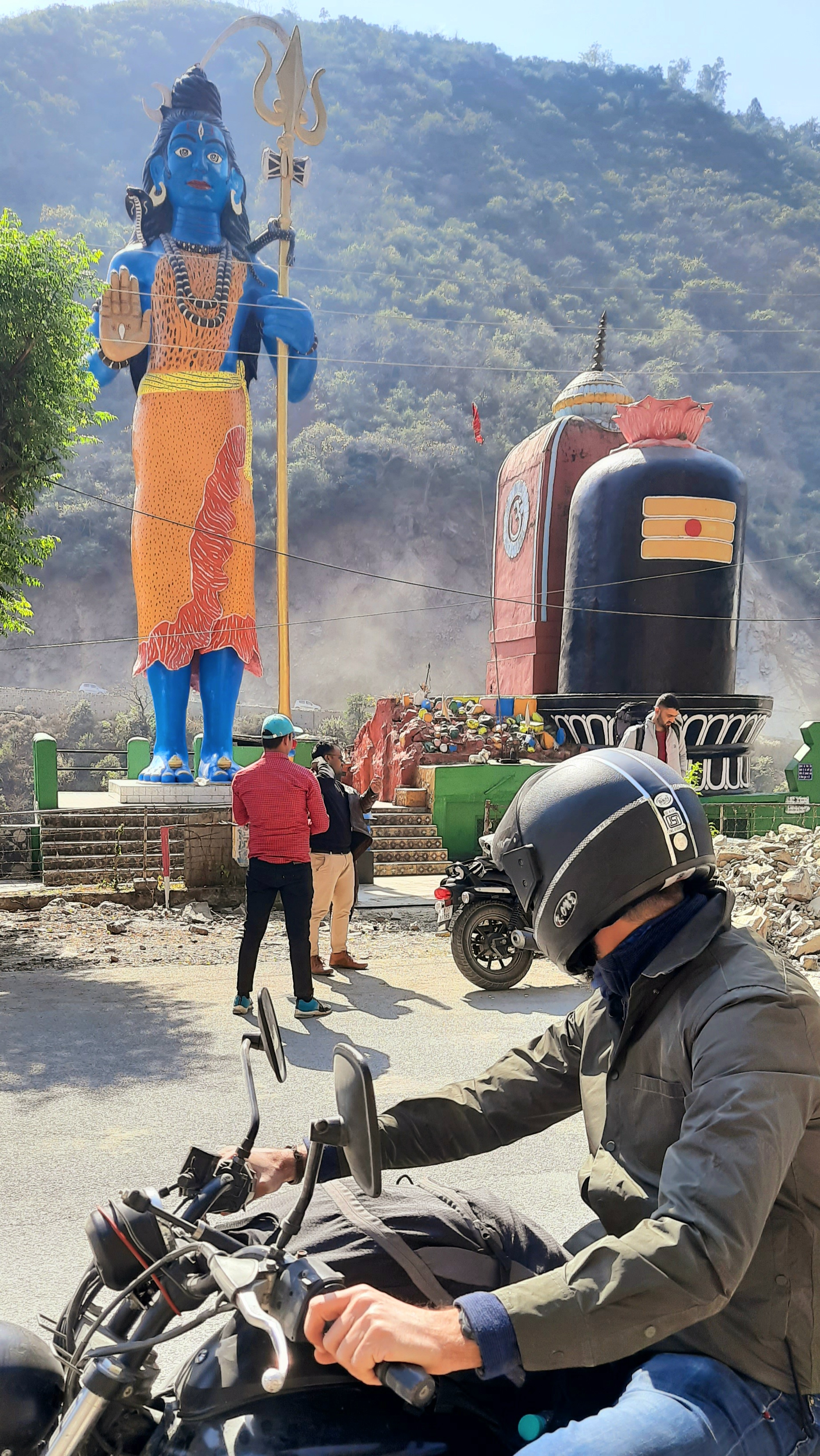
After that we made a stop at the huge Shiva statue alongside the road (quite applicable, since we were on our way to a temple dedicated to this Hindu God).
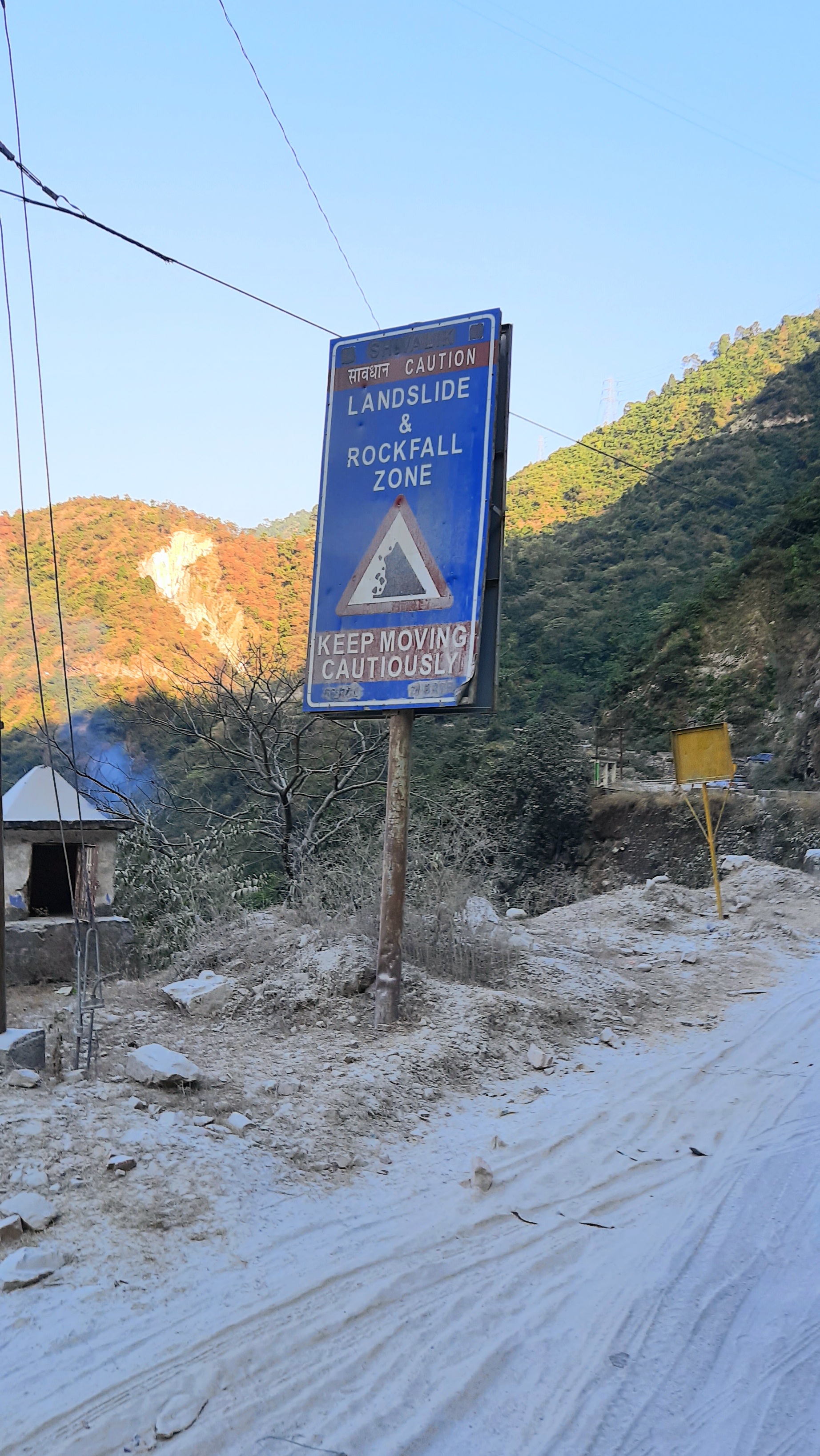
Other than that we had to make quite a few stops because of road damage due to landslides.
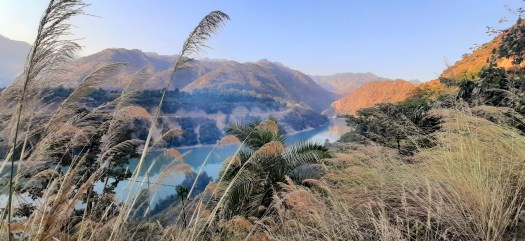
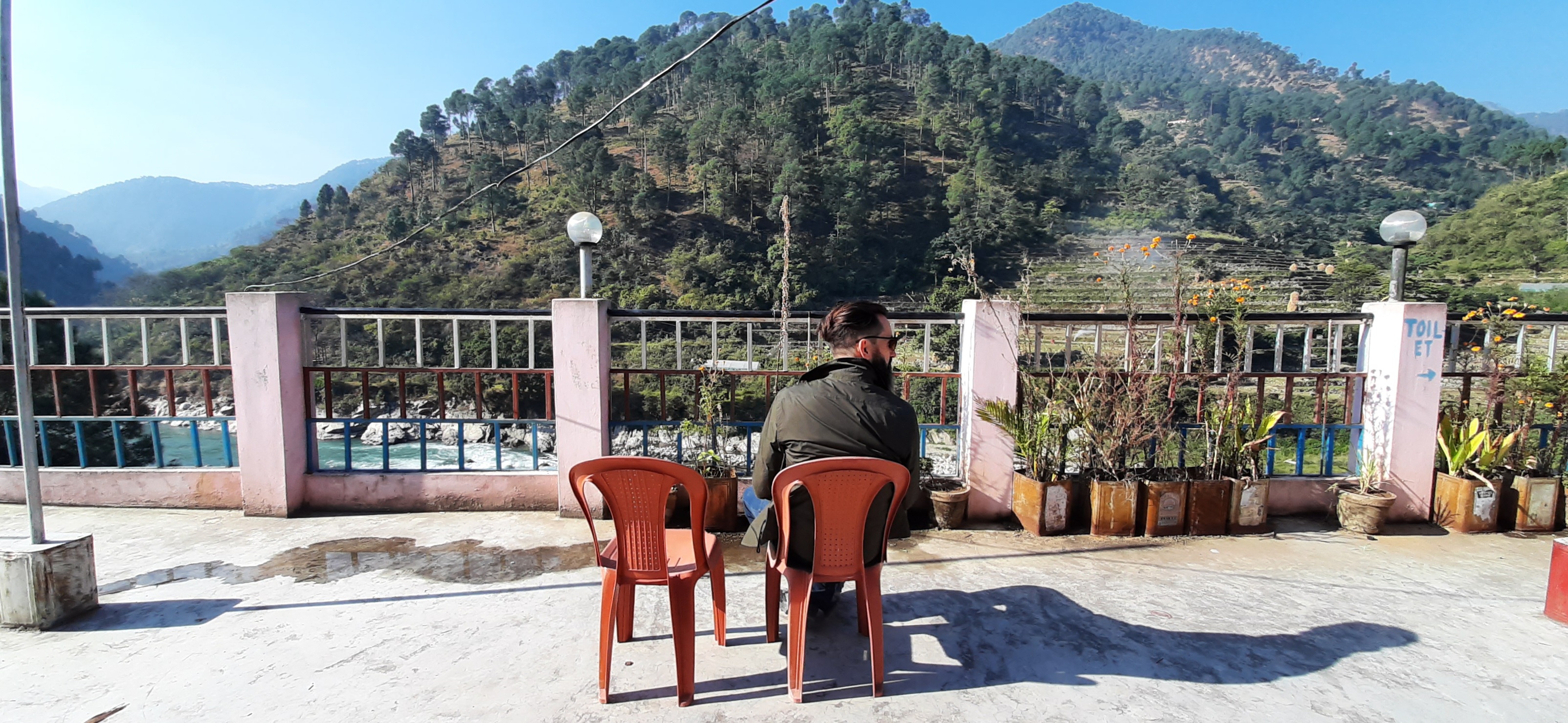
Luckily the views are amazing the whole way through, so it’s okay to be slowed down a bit. After a few hours we reached the colourful town Devprayag.
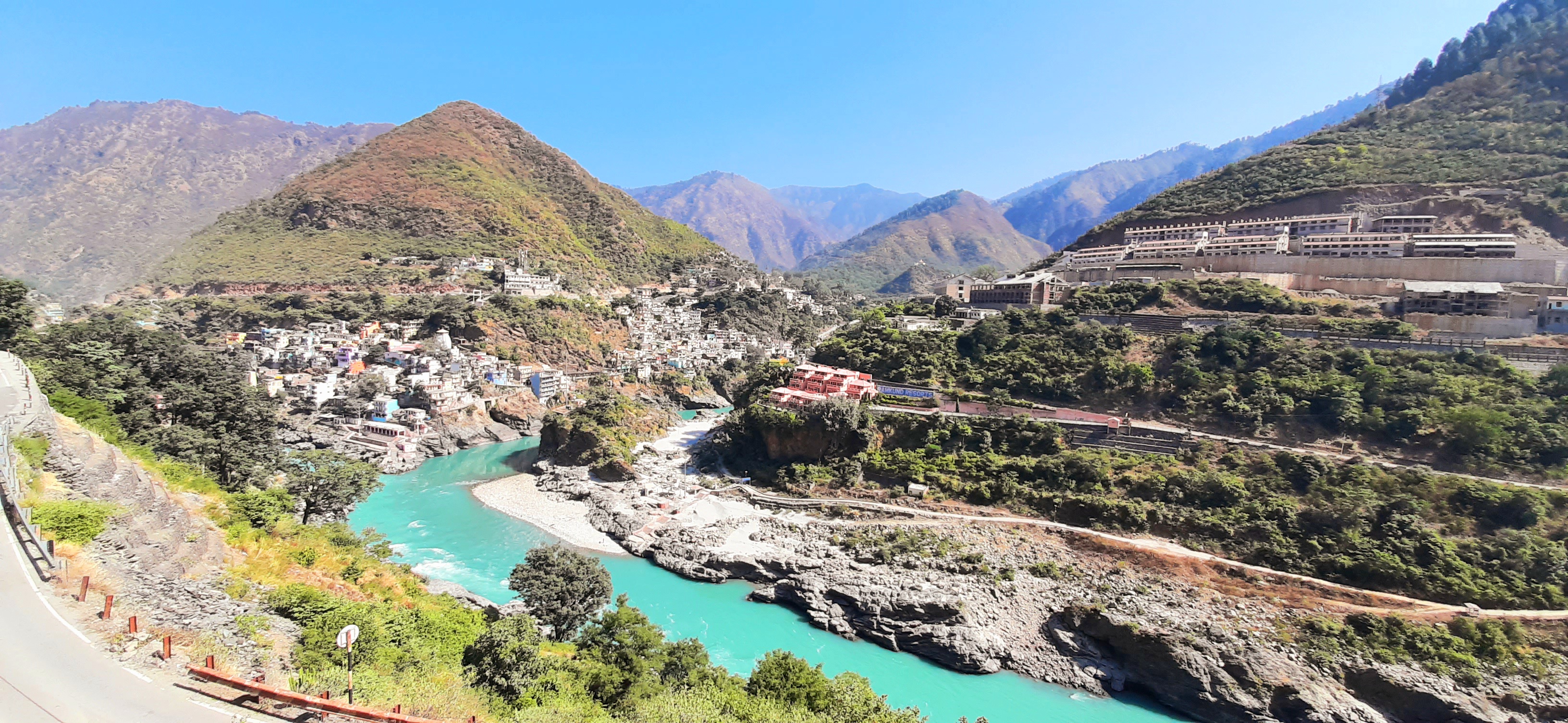
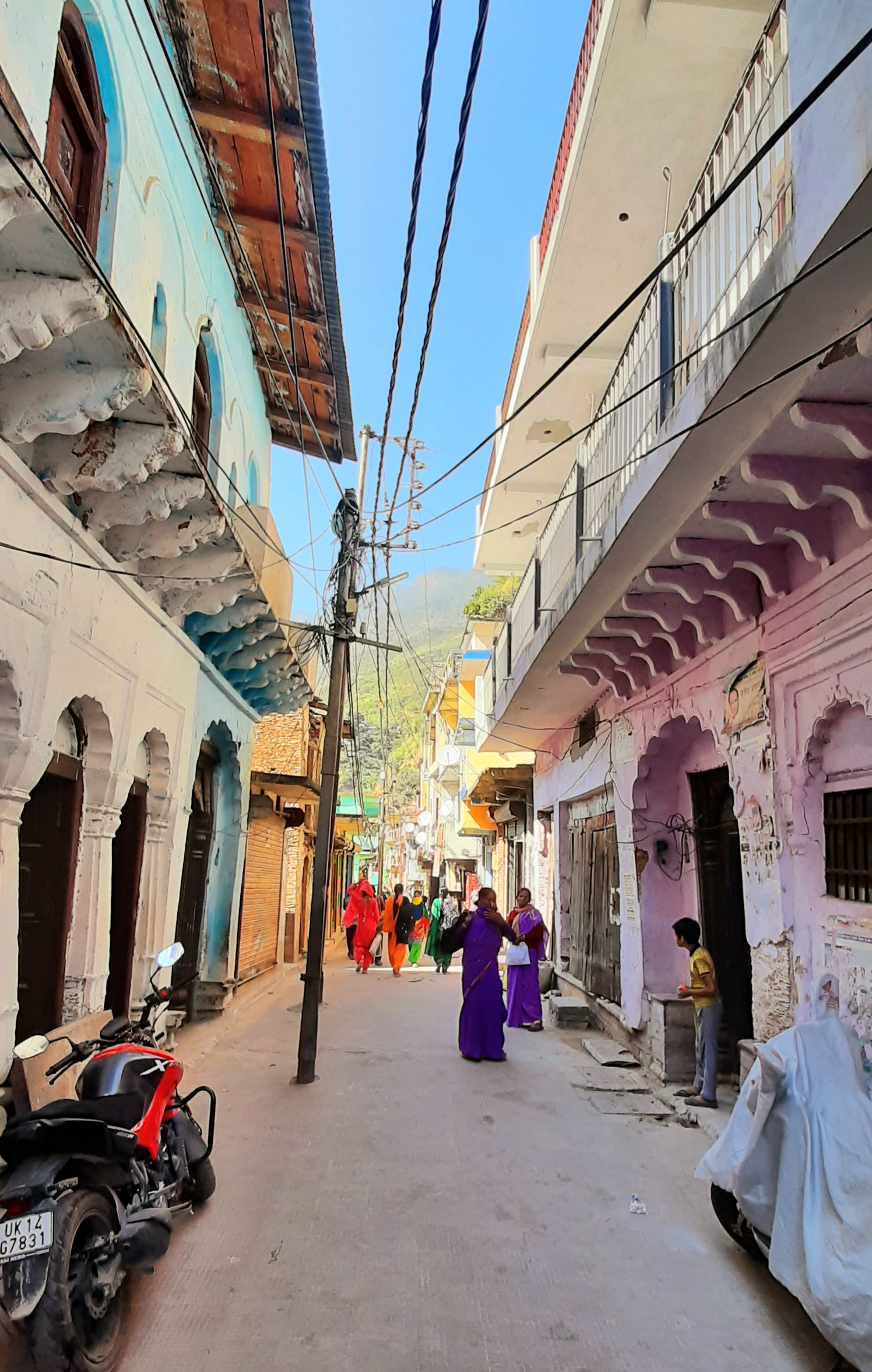
The translation of the name Devprayag, ‘Godly confluence’ has to do with the sacred occurance at this location: at this conjunction the ‘heavenly’ Alaknanda River and Bhagirathi River meet and flow on as the holy Ganges (or Ganga).**

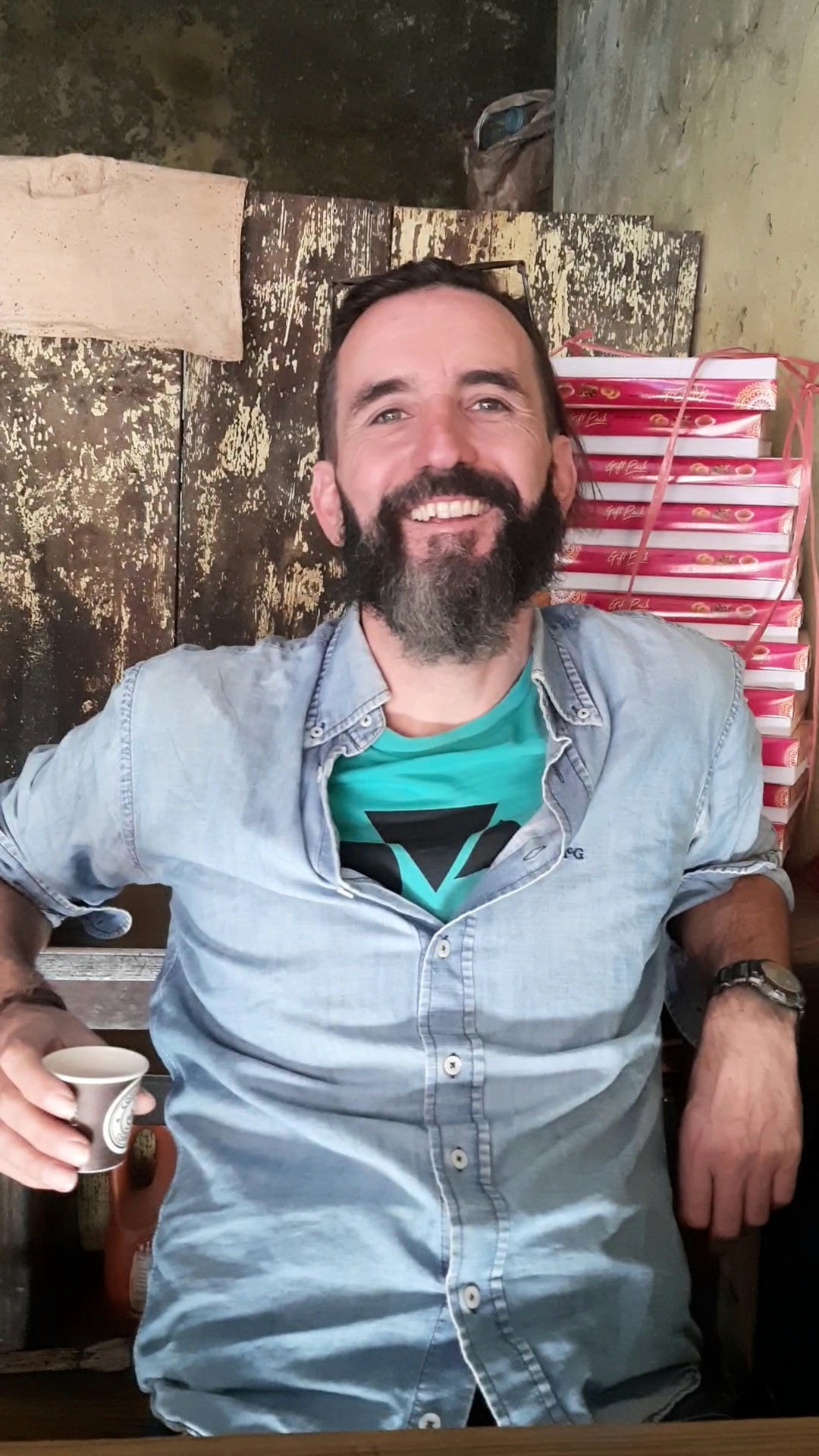
Time for some chai, with curious villagers (including a calf, sticking its nose around the corner).
After 142 kilometres, a lot of photos along the way – of the amazing views, and some selfies, with the road dirt still on our faces) we reached Rudraprayag. Another confluence point: this towin is where the rivers Alaknanda and Mandakini meet.
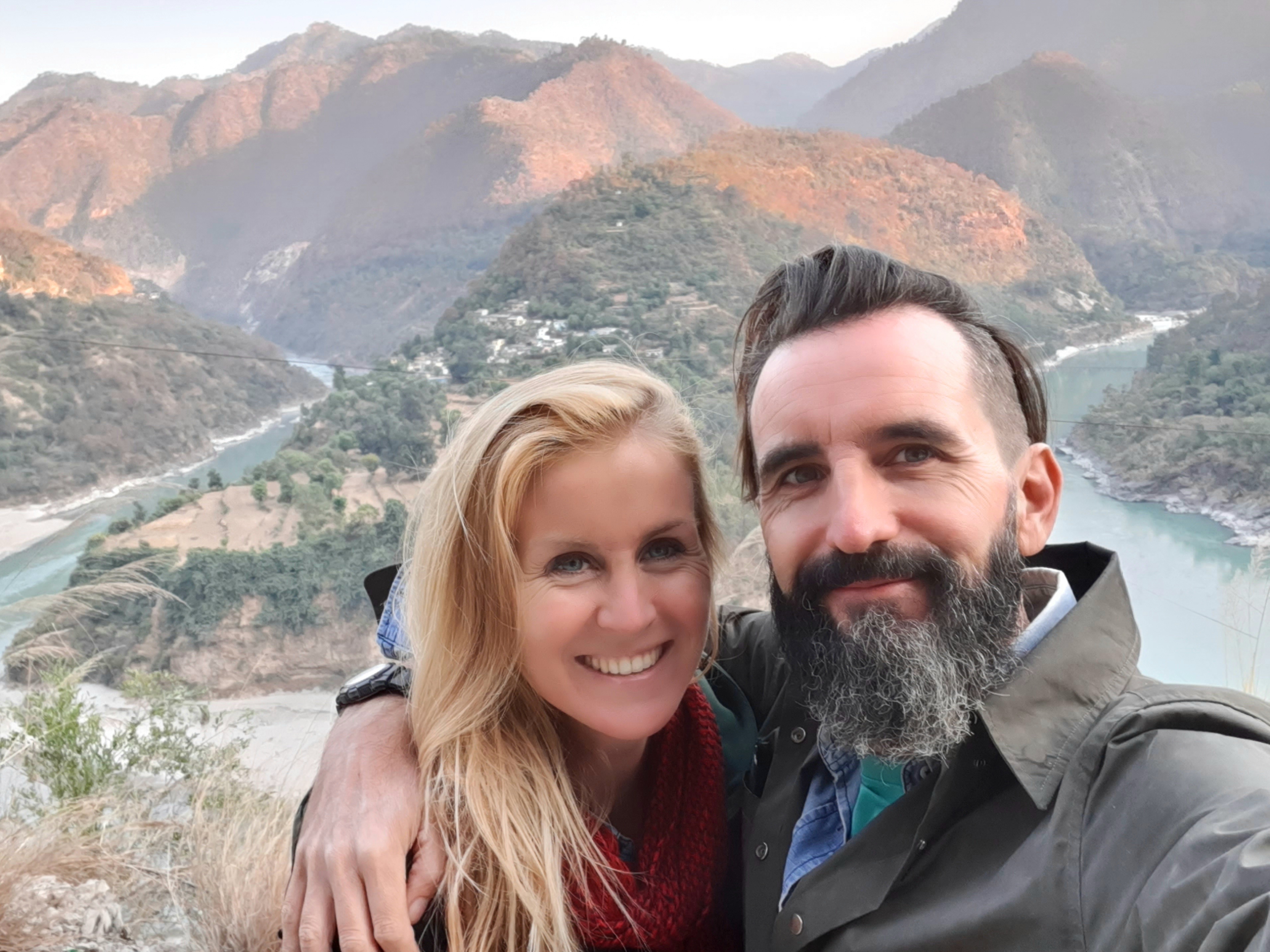
We were glad to find some rest here after a first day full of impressions!
Day 2 – Rudraprayag to Gaurikund
The next day we wanted to Rudraprayag leave early, but the circumstances decided differently: some small technical difficulties with the bike!
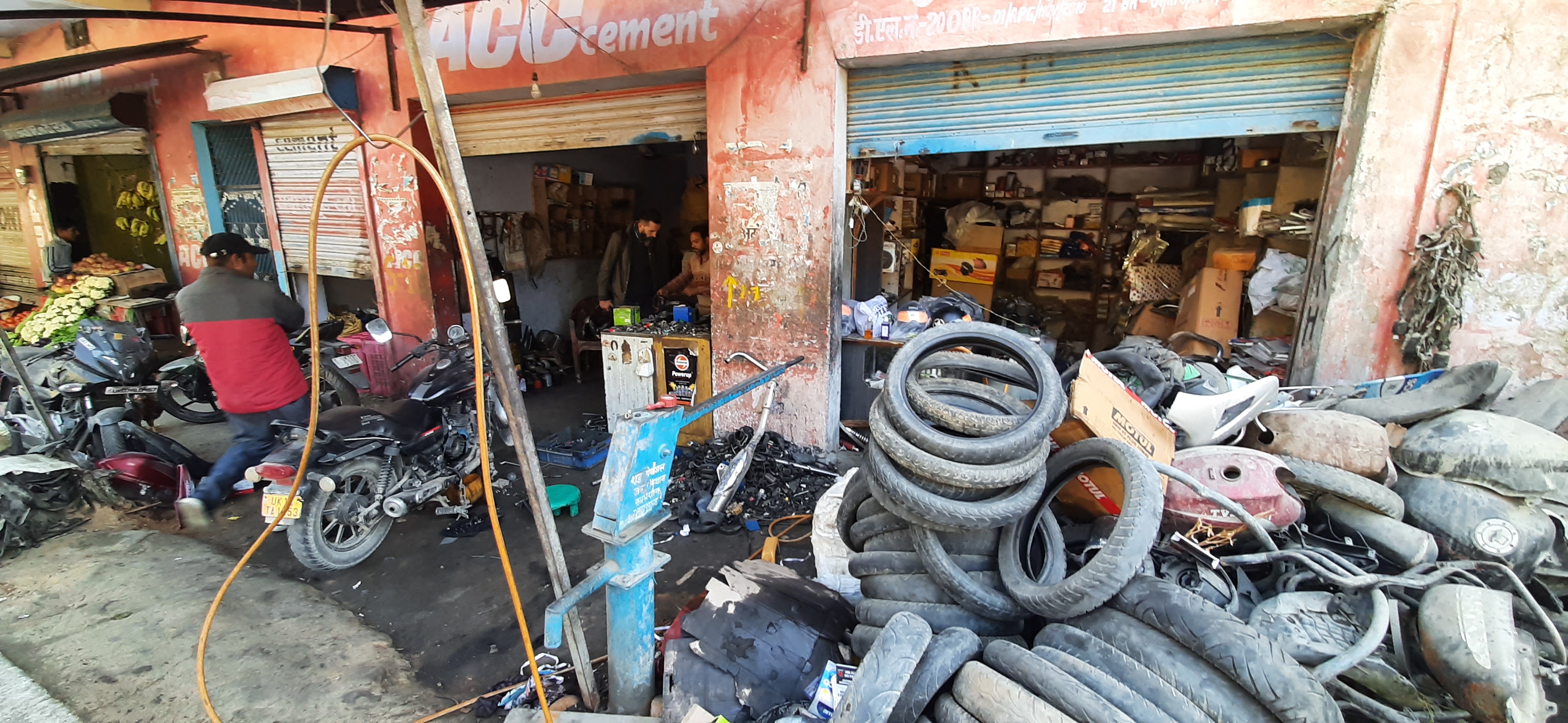
But also in this town, like almost everywhere in India: there seems to be a bike repair store in every street.
So while we were having breakfast, an experienced mechanic changed our clutch plates in a flash.

After over 70 kilometres we reached the town Sonprayag. From here we had to drive 25 kilometres more to reach Gaurikund, the base camp of the Kedarnath Trek.
This place you can’t really call a town, because it seems that you can only find hotels along the road. But staying here has a number of adventages, namely 1) in Gaurikund you can already register for the trek the next day (you also sign a lease saying that risking your life by going up is completely your own responsibility) and 2) from here you ‘only’ have to get up at 6am to go the taxi standpoint, and get a taxi to the starting point of the trek.
Day 3 – Kedarnath Trek
So, after a short taxi ride, a Maggi for breakfast and without any physical training, we started trekking early the next morning.
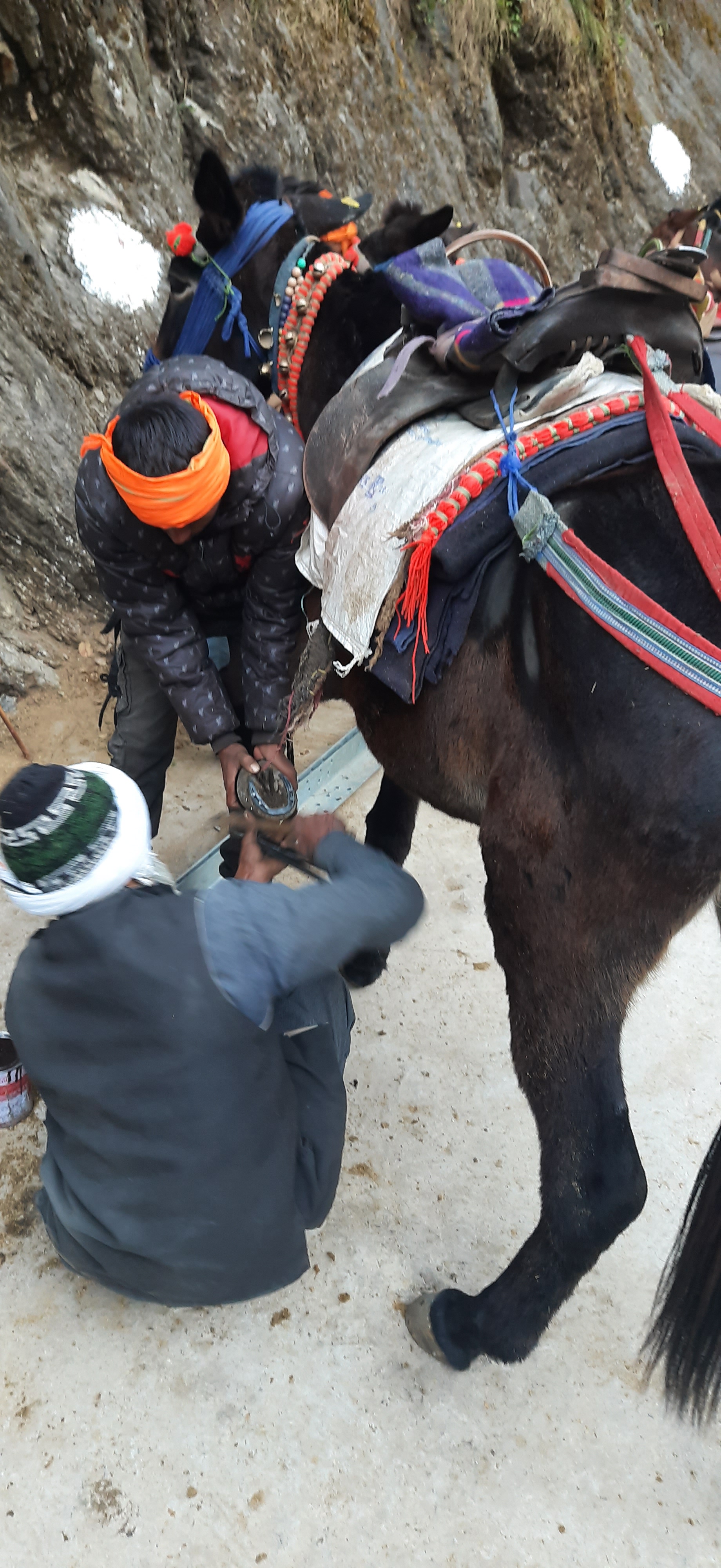
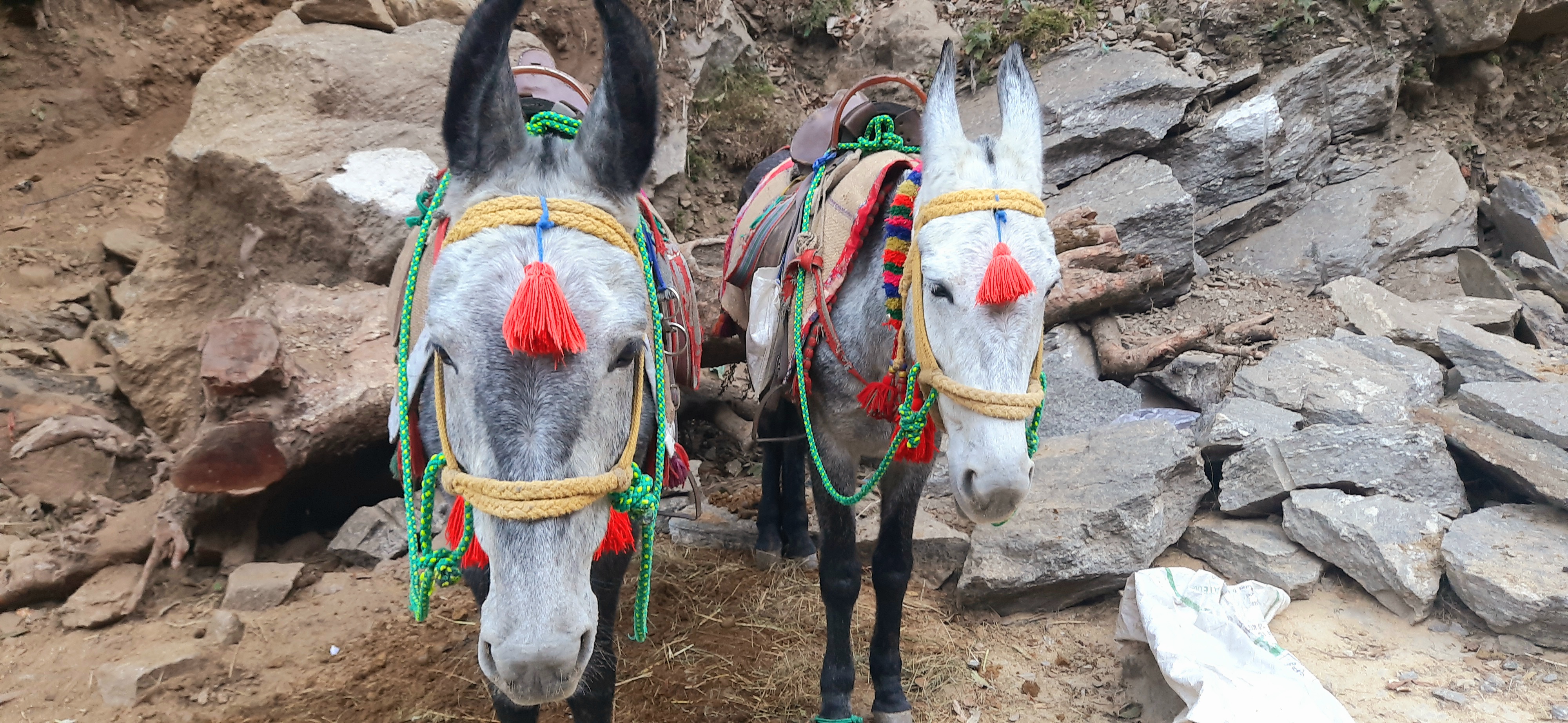
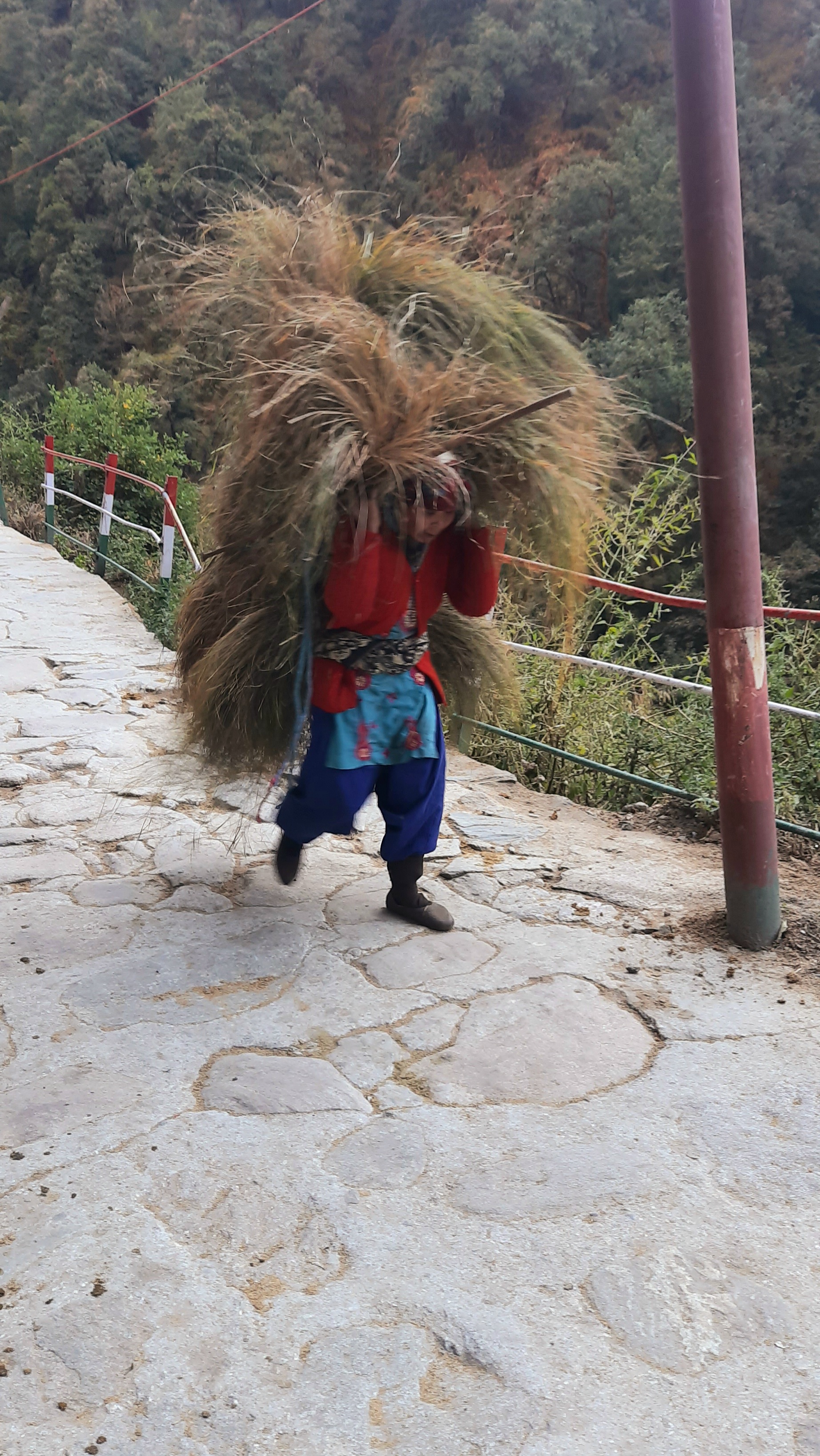
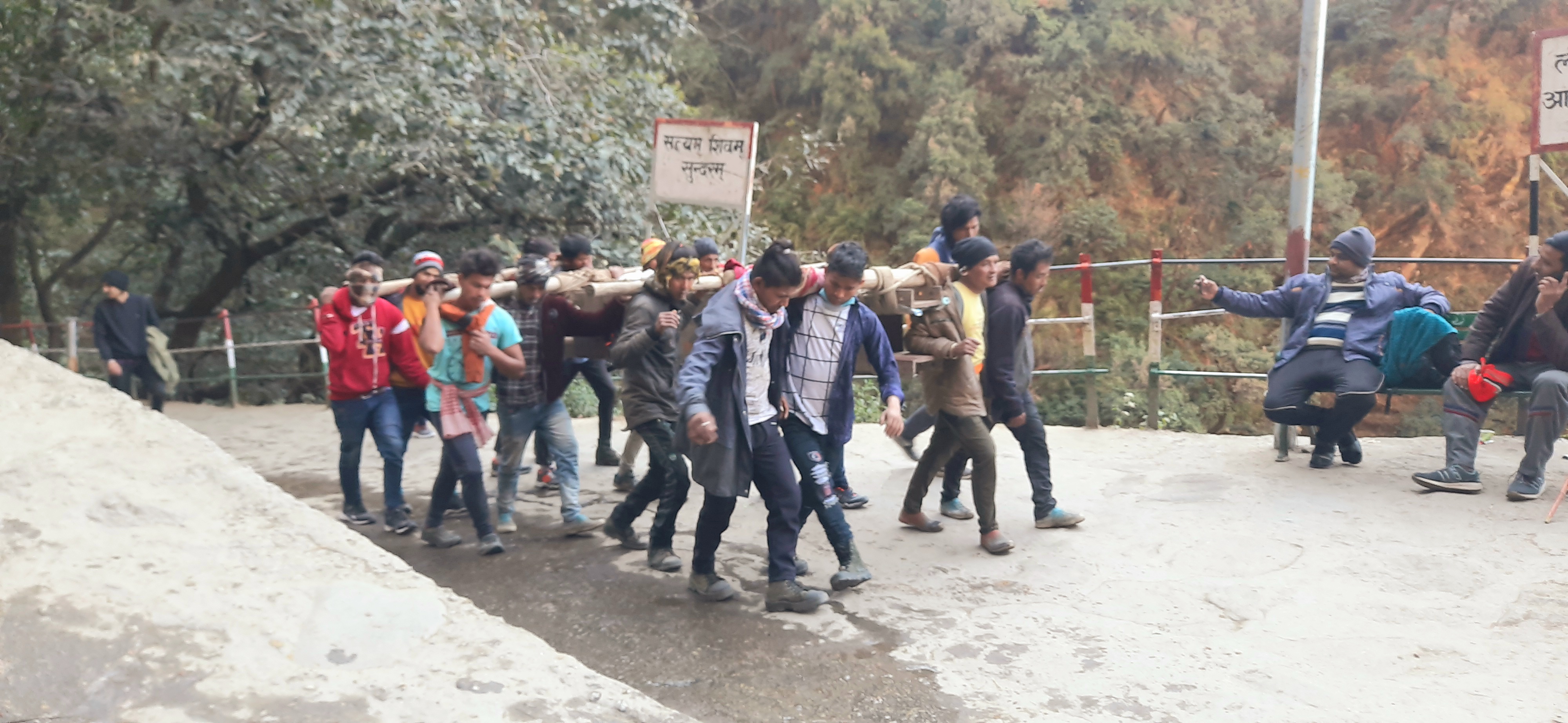
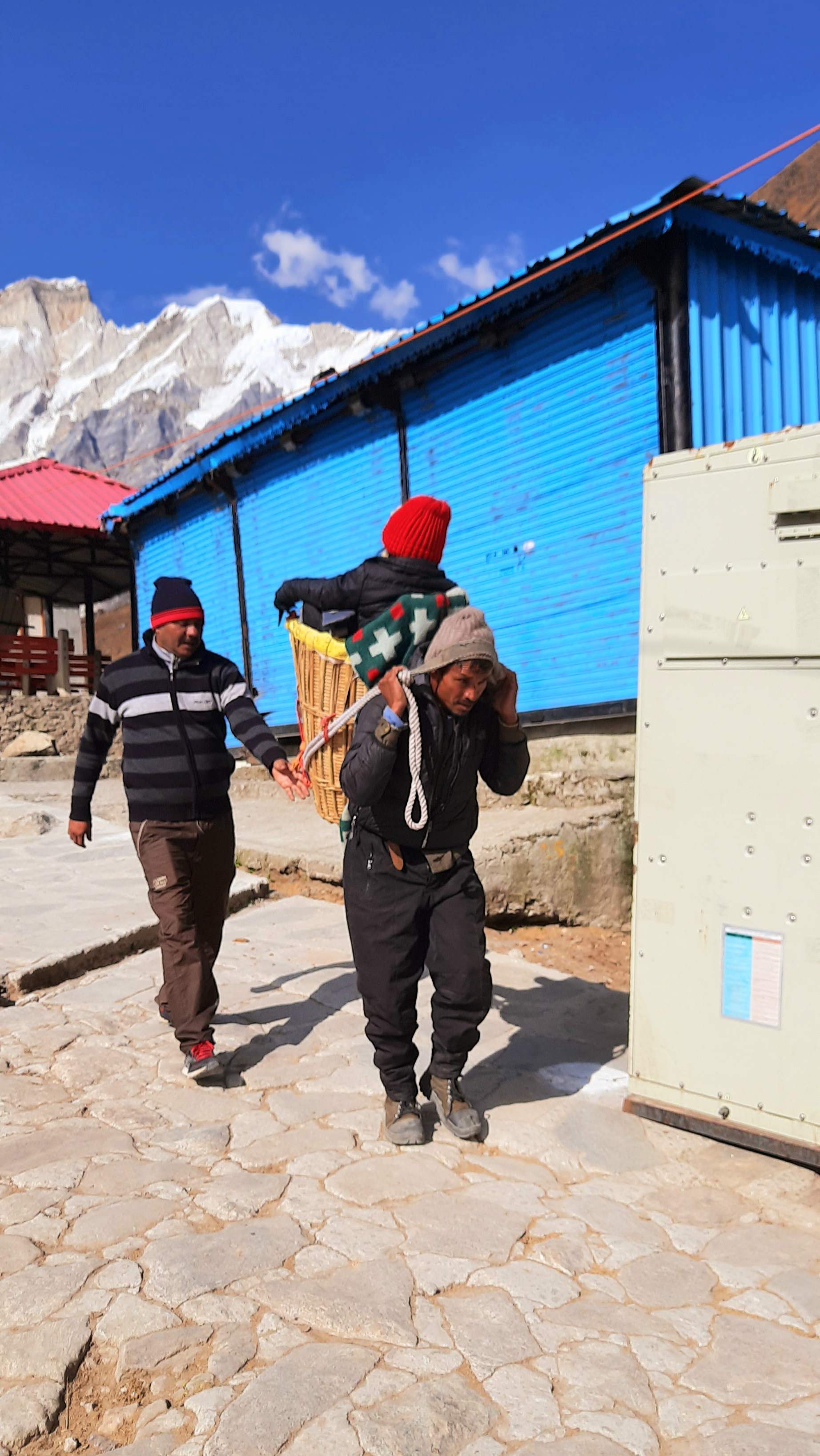
Surrounded by pelgrims, other tourists and hard working people going up: horses used as draft animals, to carry the hikers that can’t make it on their own, older ladies with baskets full of grass on their back, and workers carrying heavy loads of building materials up the mountain.
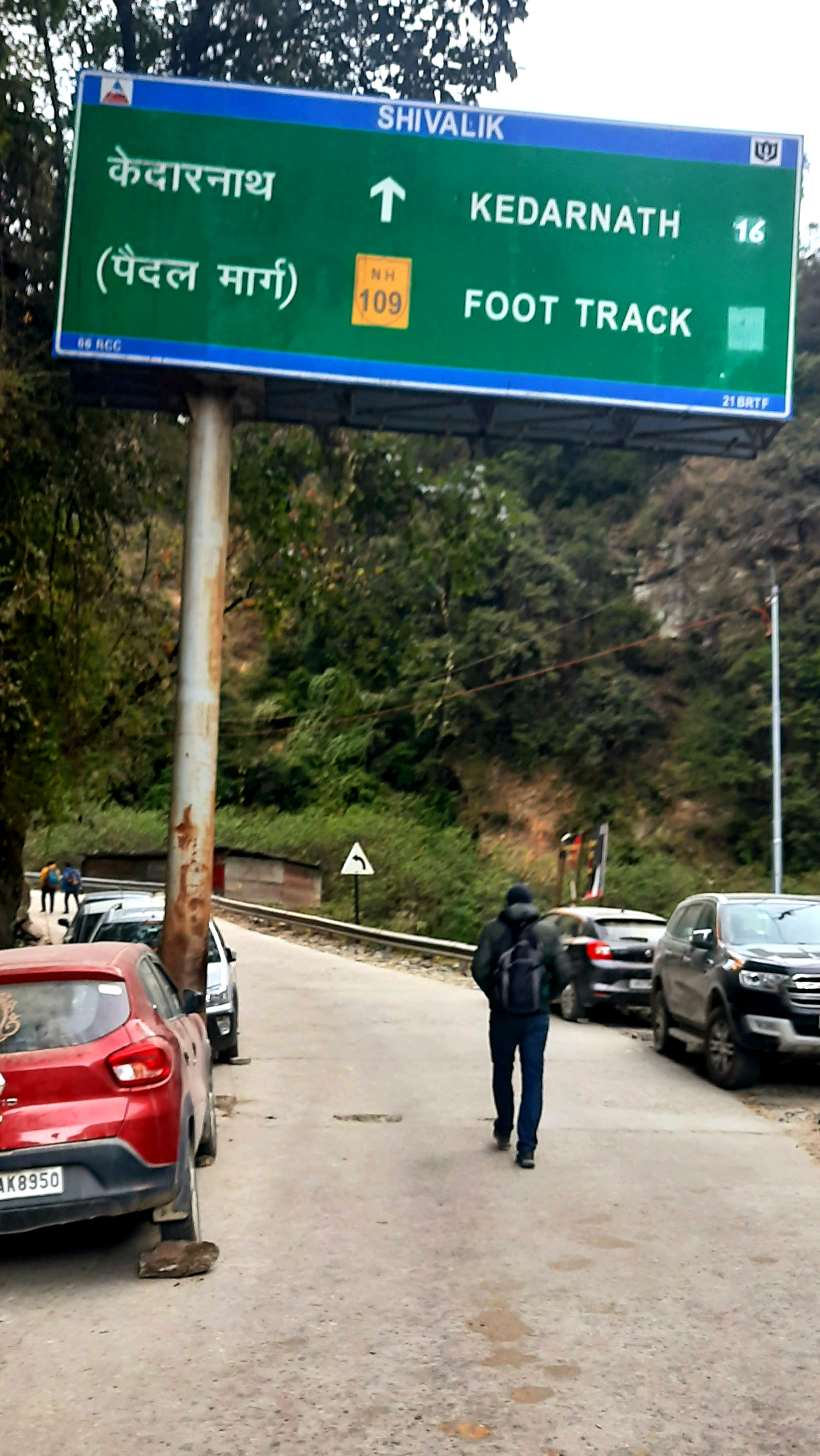
Despite the total distance of the trek only being 16 kilometers, it’s quite an intensive walk, with adifference in height of 1.570 meters (Kedarnath at an elevation of 3.553 meters above sea level).
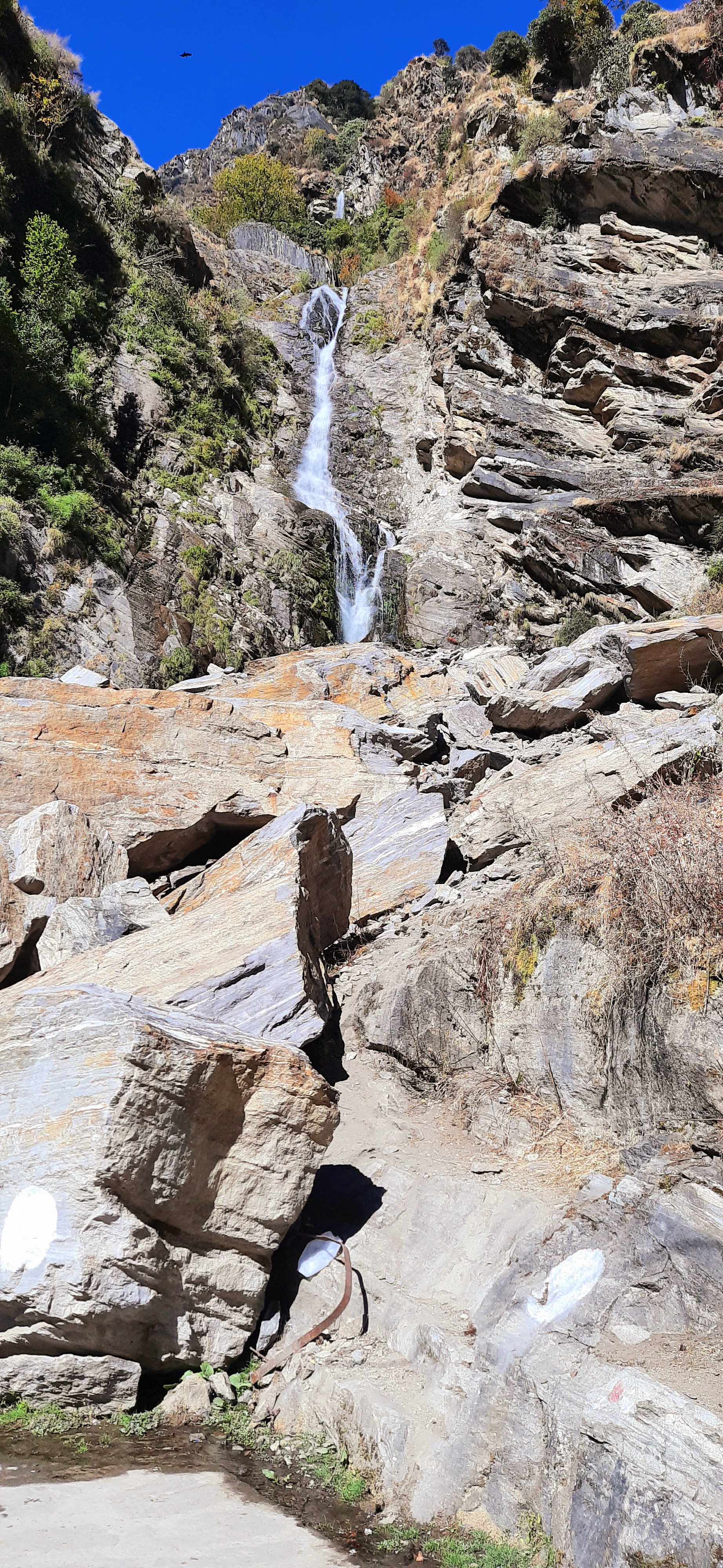
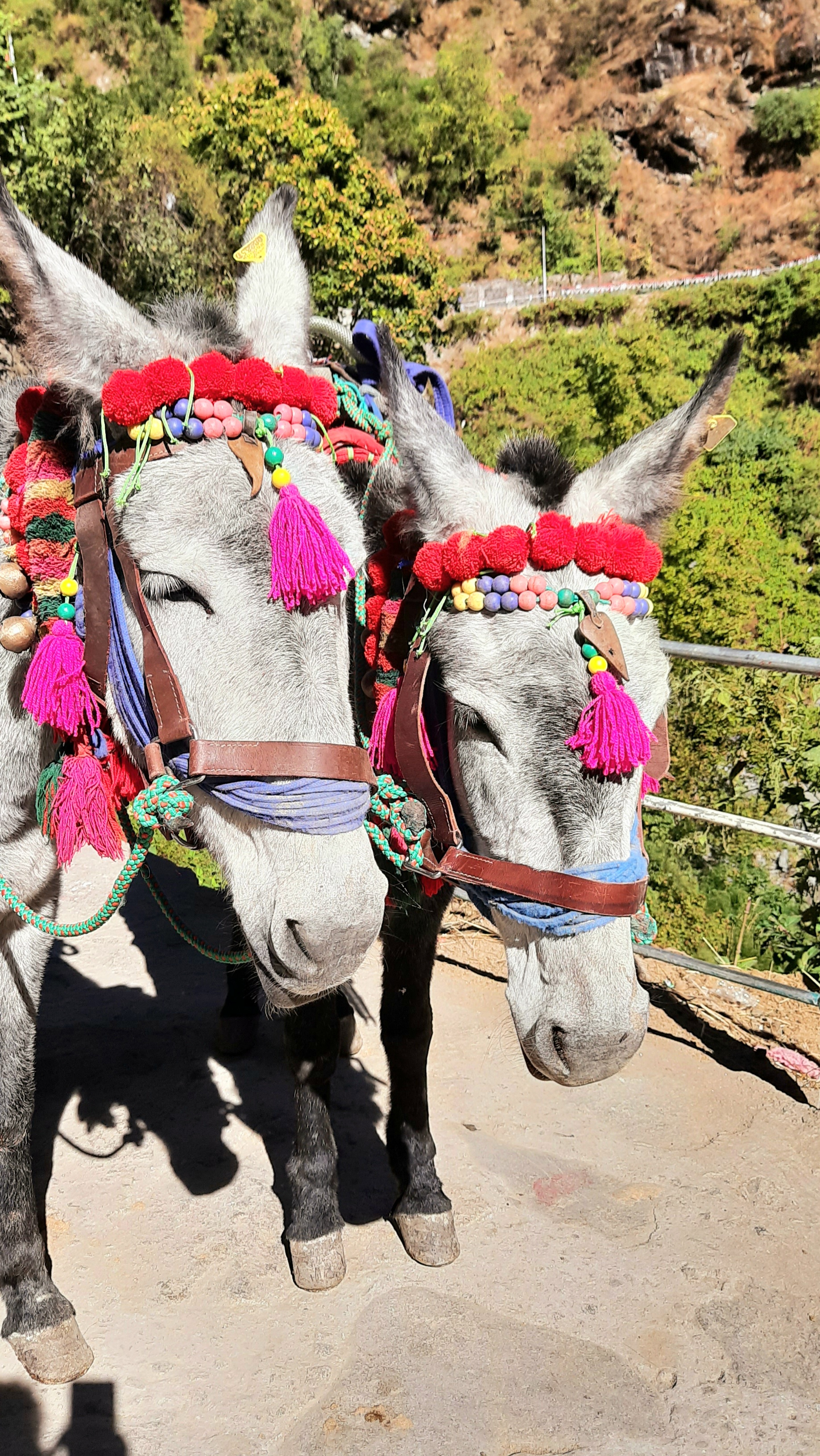
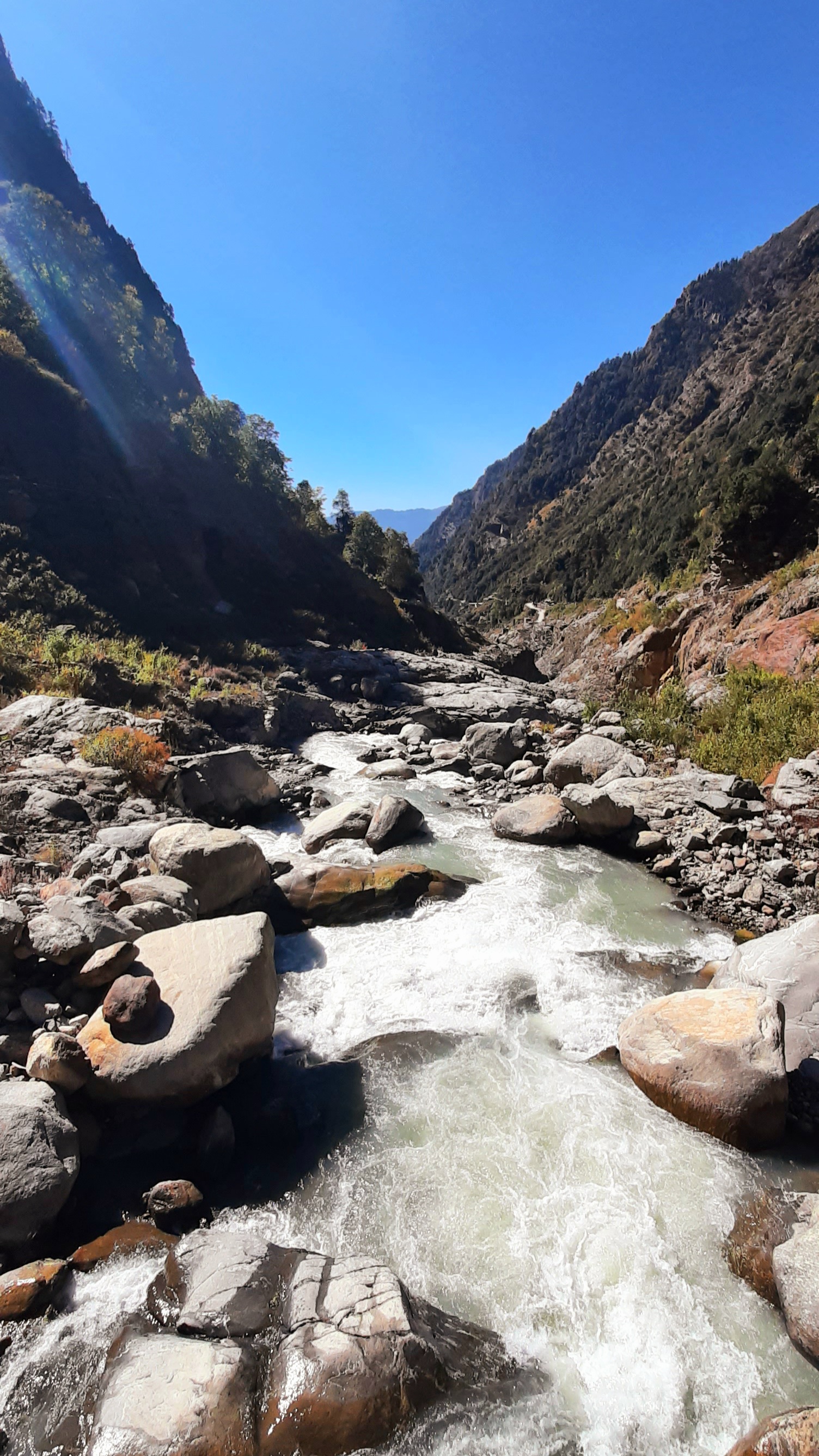
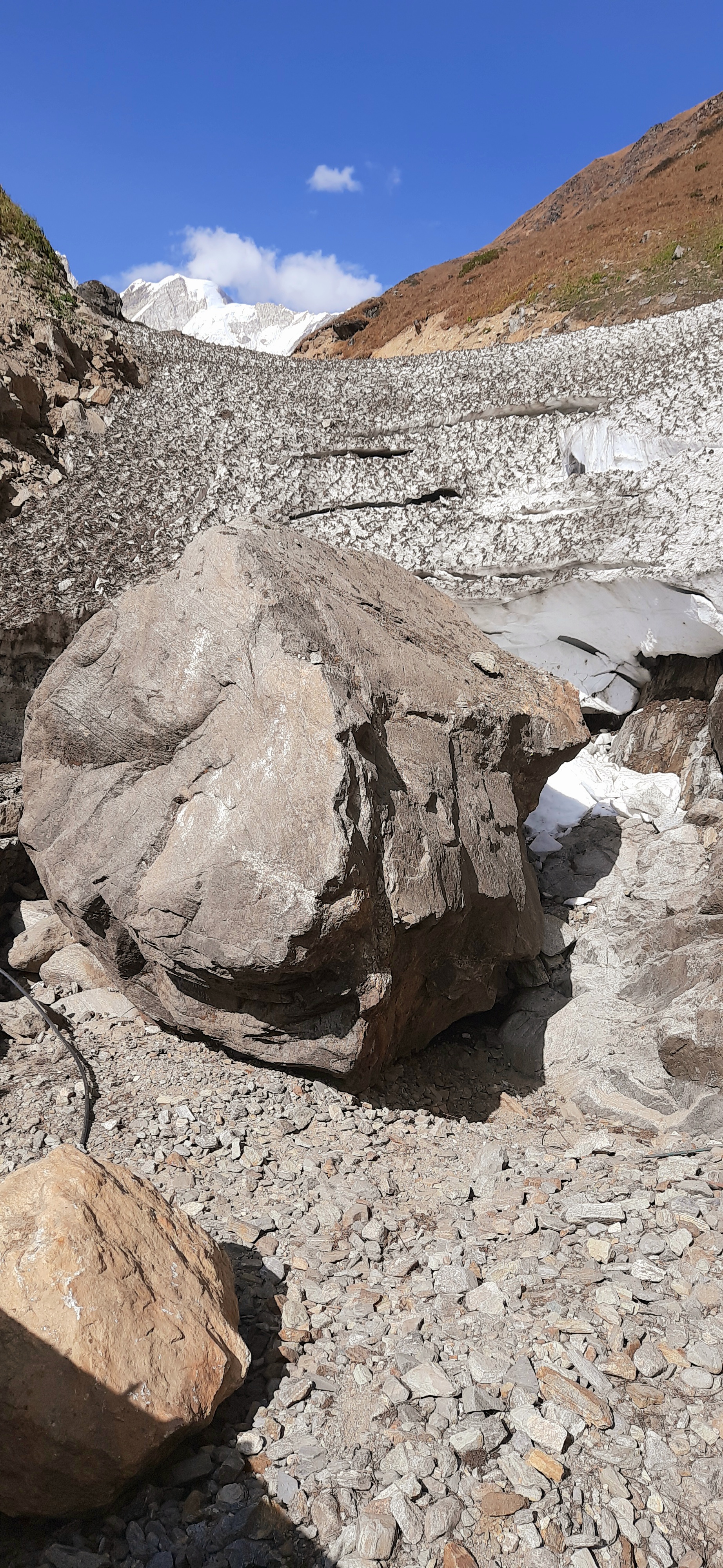
On the way up you see the most beautiful surroundings – natural waterfalls, the wide riverbed, and the first permanent snow for example, – as well as a lot of Maggi and chai stands. Meanwhile the white mountain peaks grow bigger and bigger in the background.
The hike is quite a social happening too: since everyone has the same goal, you easily get in contact with other hikers or pilgrims.
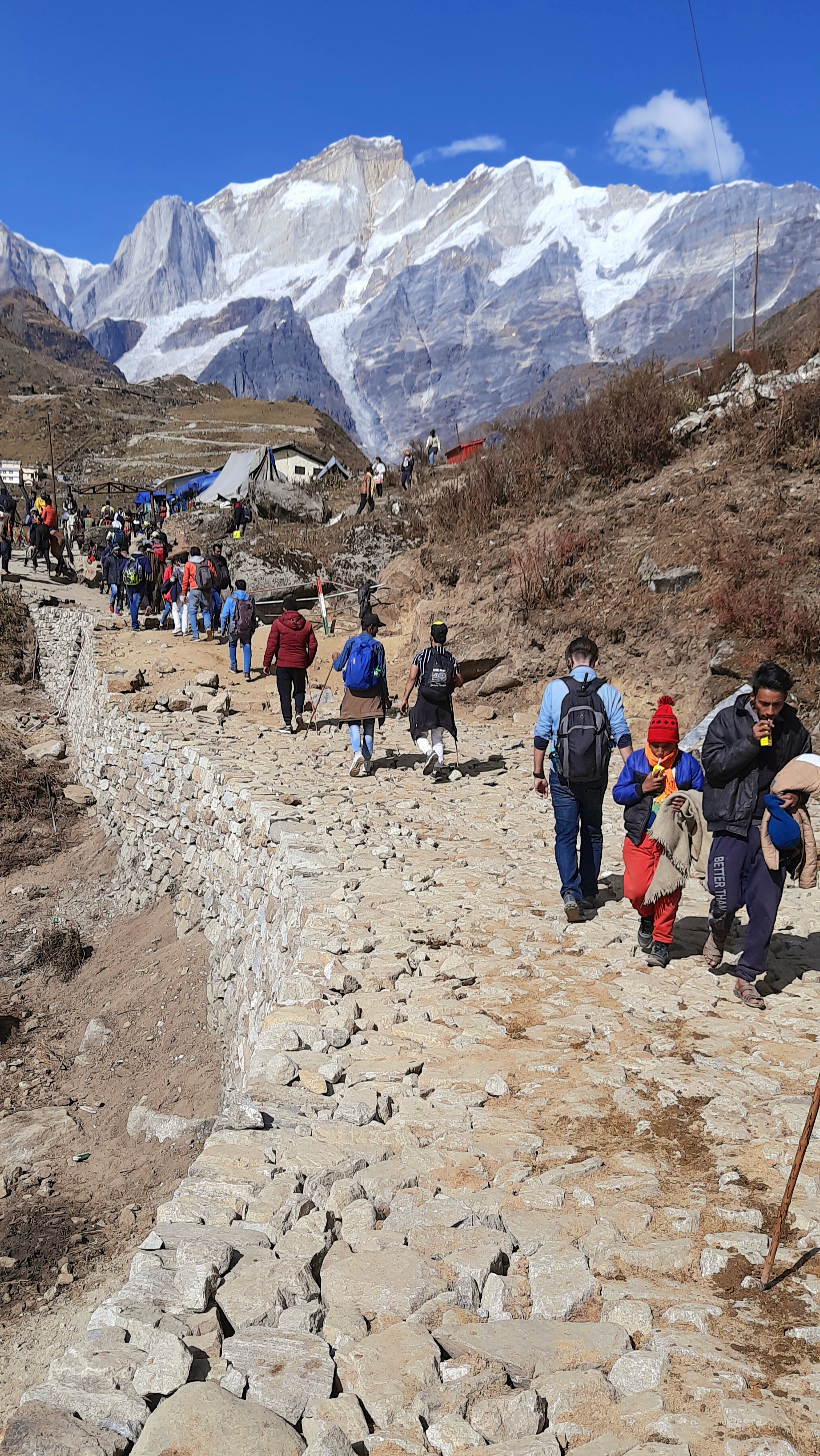
When we finally reached the top around 3pm, the first thing that caught our eye wasn’t the sacred Shiva Temple… but the Helipad!
Apparently a lot of people that can’t make the journey by foot but do want to visit the holy site, choose to take a helicopter flight (costs: around 30 dollars..).
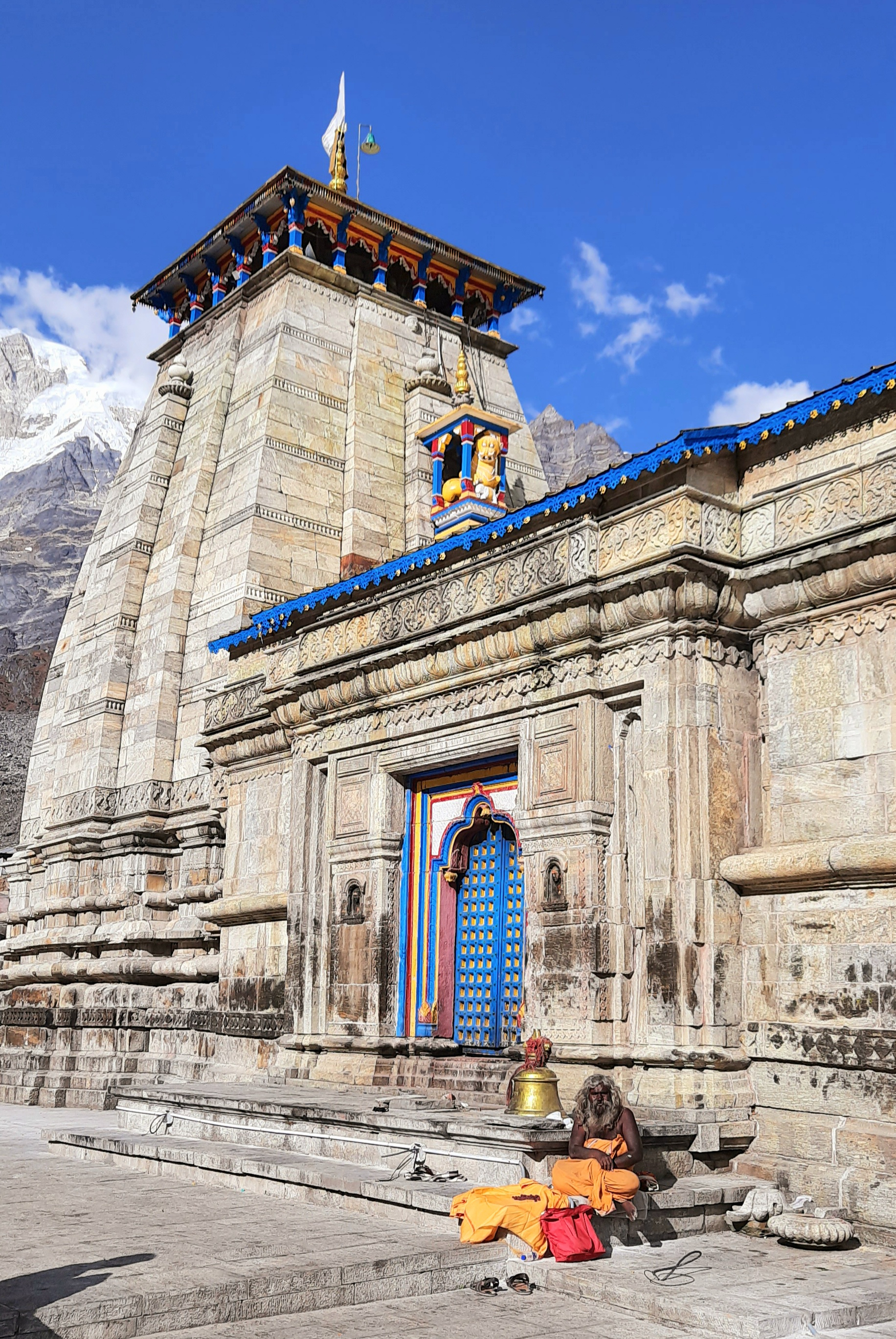
On the top we walked up to the Kedaranatha Mandira – ‘the Temple of the Lord of the Field’ (unfortunately because of the timing, we couldn’t go inside anymore).
In 2013 there were terrible flash floods in North India and the Kedarnath area. Luckily the temple structure itself did not suffer any major damage – apart from a few cracks in the walls (this in contrast to the surrounding town and the temple complex).
Some Indian hikers told us that apparently a large rock had functioned as a barrier in this way has protected the temple from the flood. Many Hindu pilgrims believe this was because of a divine intervention.
Due to limited time, we couldn’t join the ritual ceremony after sunset, and made the decision to go back on the same day.. This was quite the walk..!
When we started to feel a bit exhausted though, and were overtaken by a Baba running down the path on worn out socks only, we felt some extra energy and motivation to push through!
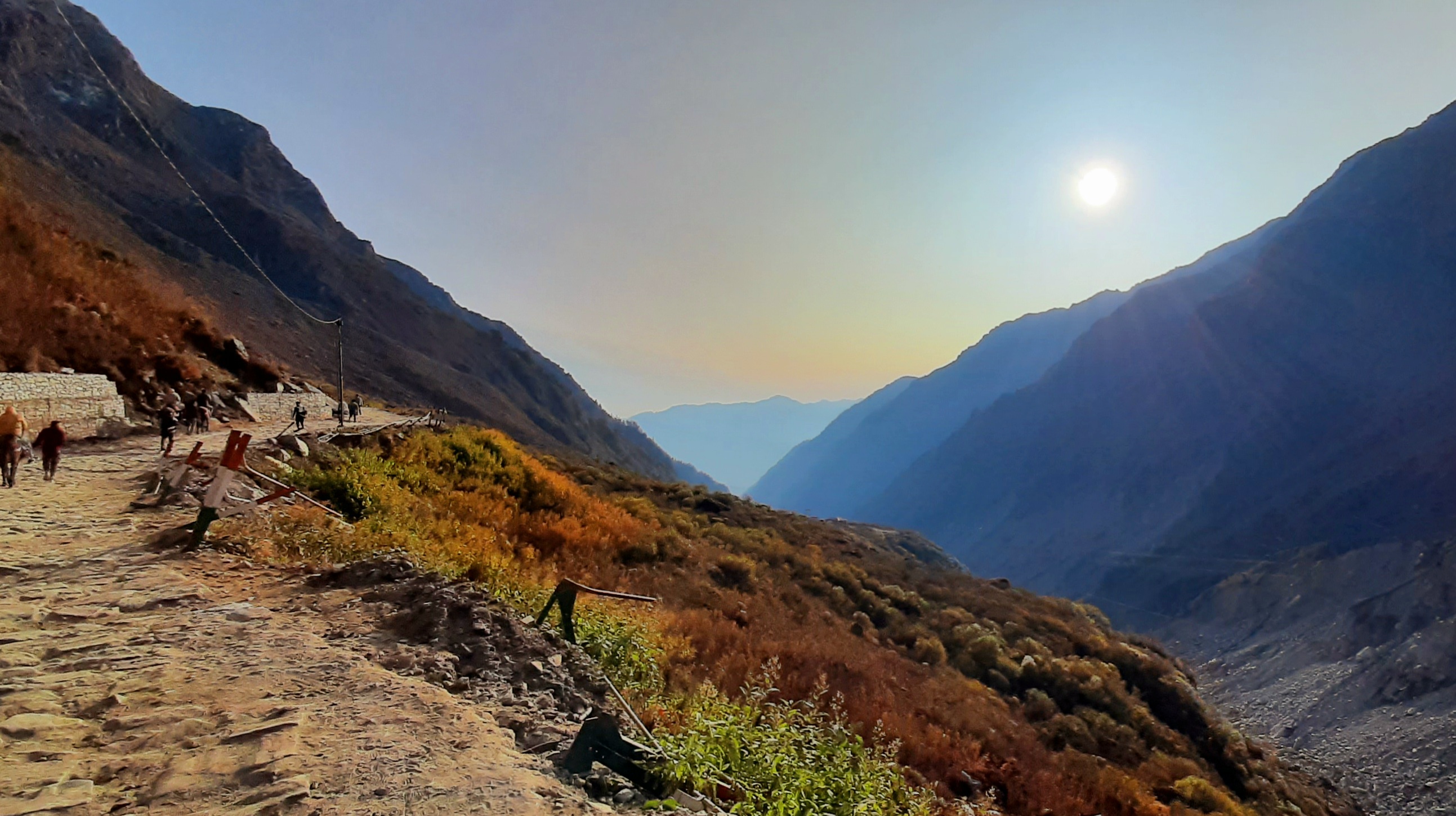
Around 8pm we finally reached the starting point and end of the trek and were brought back to the base camp point by car. Dinner with rice and dal at the hotel had never tasted better that night!
* Every year during the winter season, the temple deity is carried down to the small town Ukhimath, where the god is worshiped for the next six months.
** It is even believed that there’s a third river, the mythical Saraswati – invisible because underground, – that also meets at this confluence.
#A few tips on your way to / at Kedarnath – shortlist to screenshot
- Try to stay at Gaurikund the night before – in that case you can already do the registration the day before and you can get up a little bit later on the day itself;
- You can take a taxi to the starting point – this is not an interesting part and it saves you time to do the rest of the trek;
- Start the trek early – that way you can take it in a slower, peaceful pace. Moreover, that way you might still be able to go inside the temple and afterwards join the temple ceremony;
- Because there are many chai and food stalls on the way up, you don’t have to carry too much food up;
- If you have trouble hiking, you can also reach the temple by horse or even with a helicopter.
Tips @Breuhuys
Kedarnath, Uttarakhand 246445, India
 Breuhuys