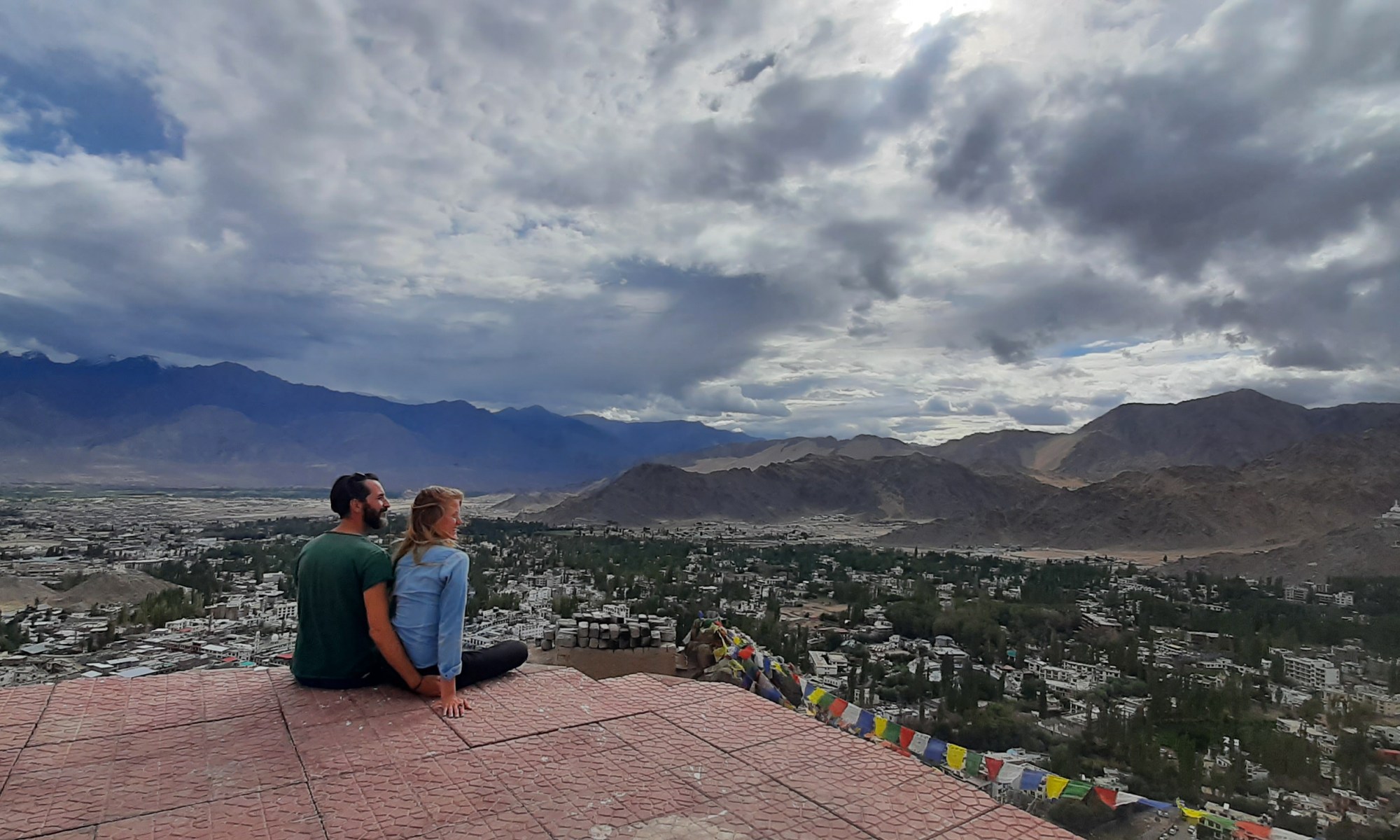
The first thing that caughts your eye when you enter Leh – beside the clear blue sky – are the beautiful surrounding mountains. It seems like you have entered a whole new world!
As mentioned before, Leh is the joint capital and largest town of the region Ladakh. The town also used to be the historical capital of the Himalayan Kingdom of Ladakh.
This is why the former residence of the royal family in Leh, the Leh Palace is situated here.
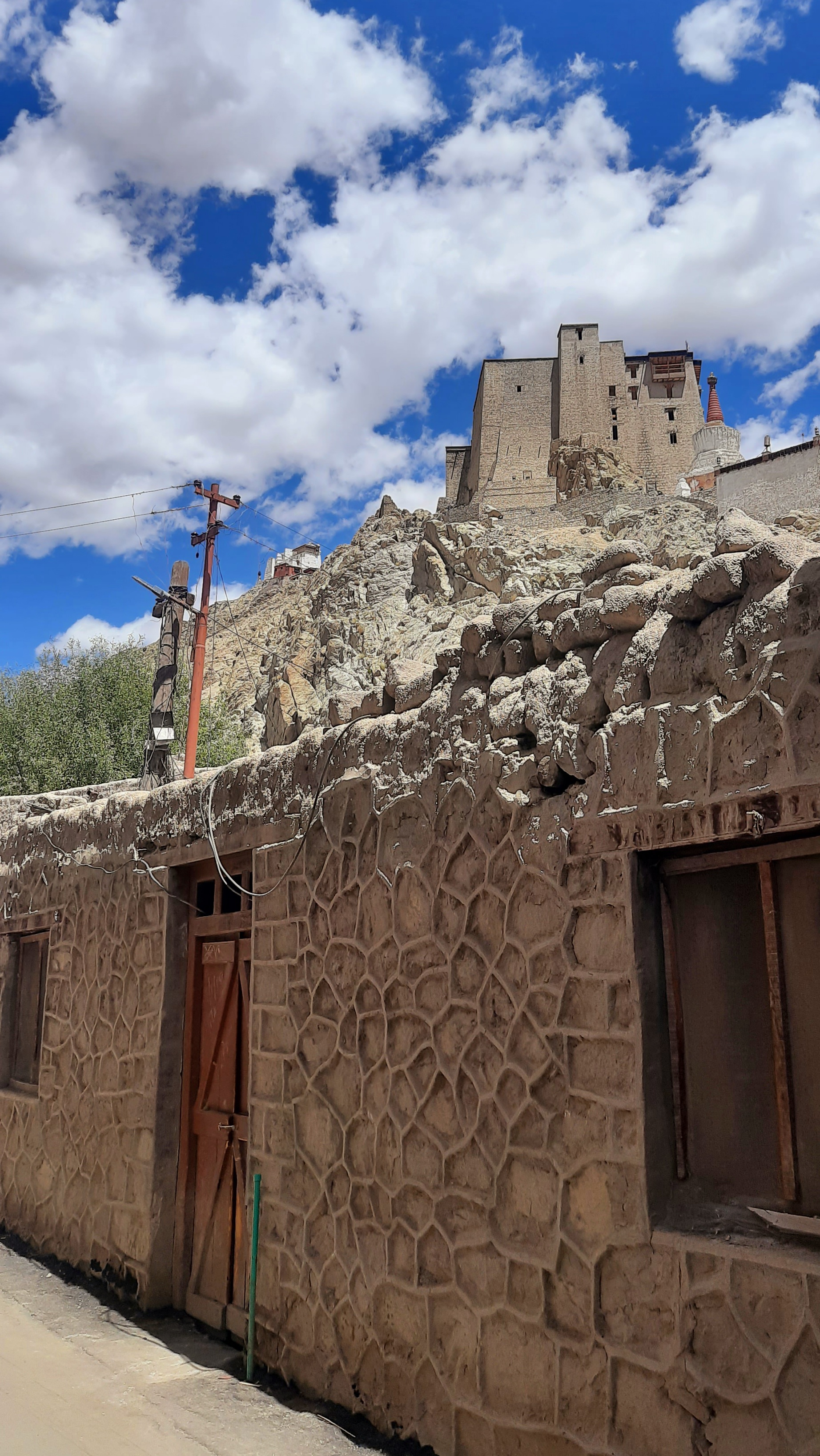

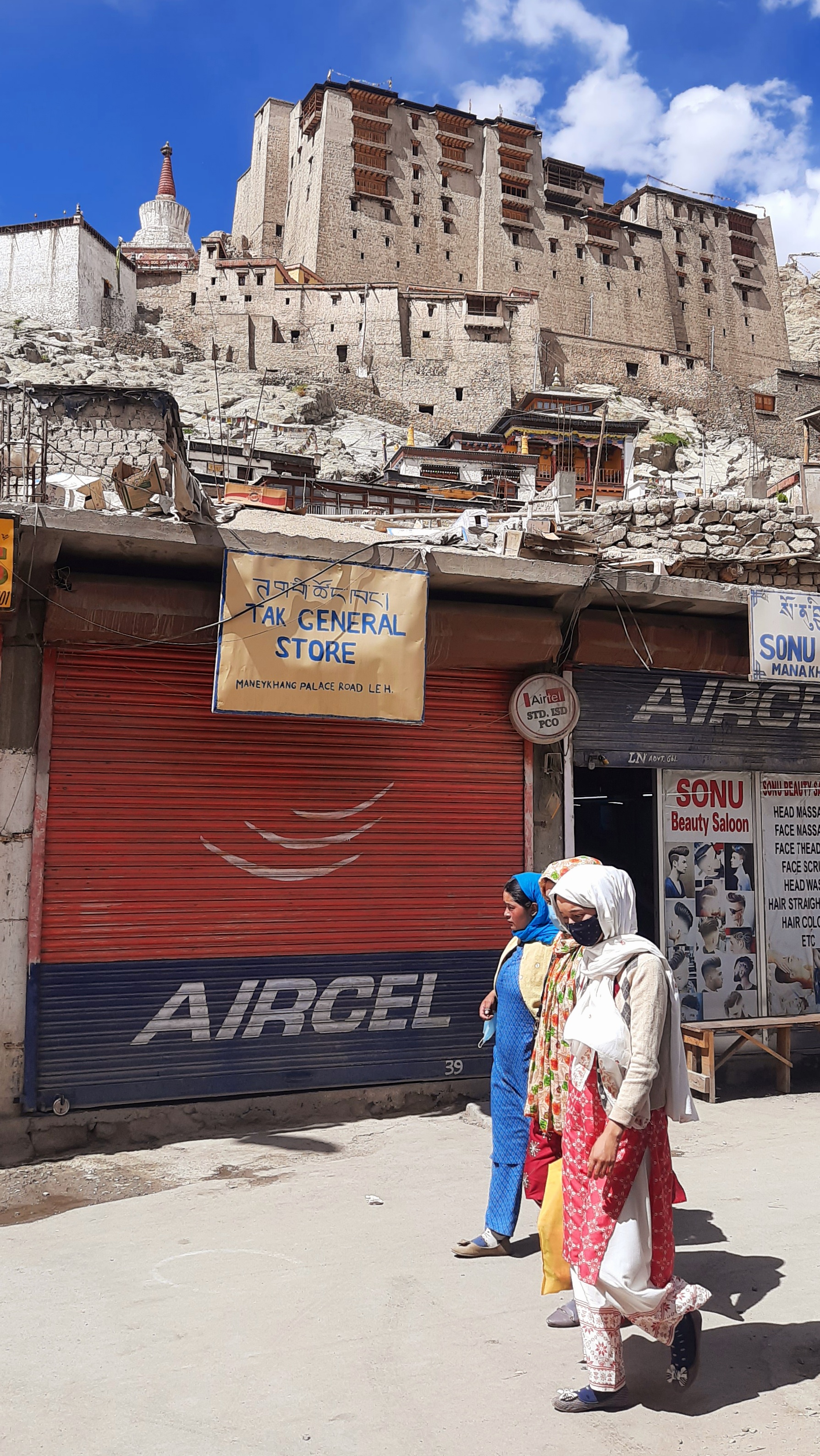
Leh Palace seen from different Old Town angles, in front of the blue sky
Two roads to Leh
Most tourists start their Ladakh journey in Leh, coming from one of the two routes: the city Srinagar in Kashmir in the west, or from Manali (Himachal Pradesh) in the south.
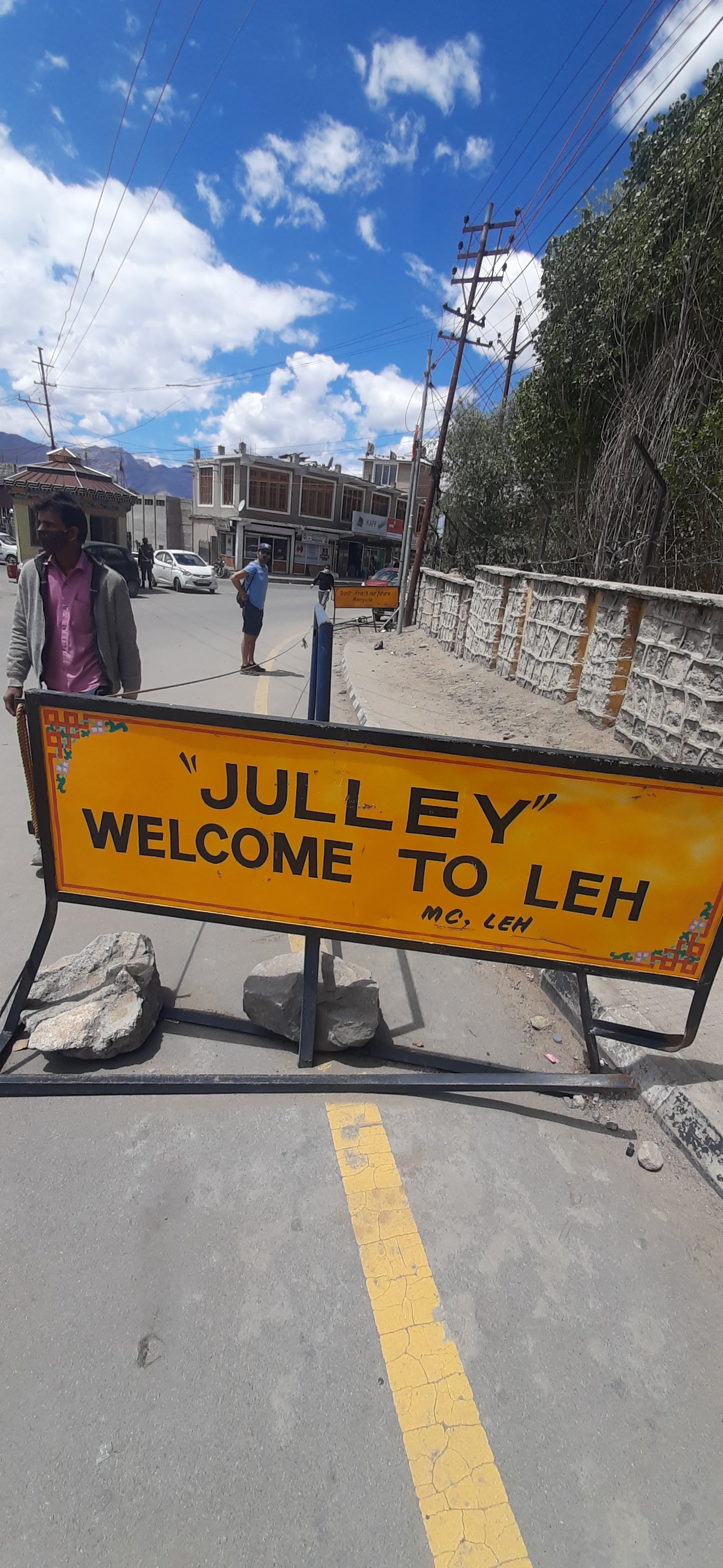
Because of the rough weather conditions – and heavy snowfall, both roads to Leh are only open on a seasonal basis.
With its long, cold winters from November to March, most citizens of Leh also leave their hometown to live and work in another warmer, often more southern part of India.
Wandering through the Old Town
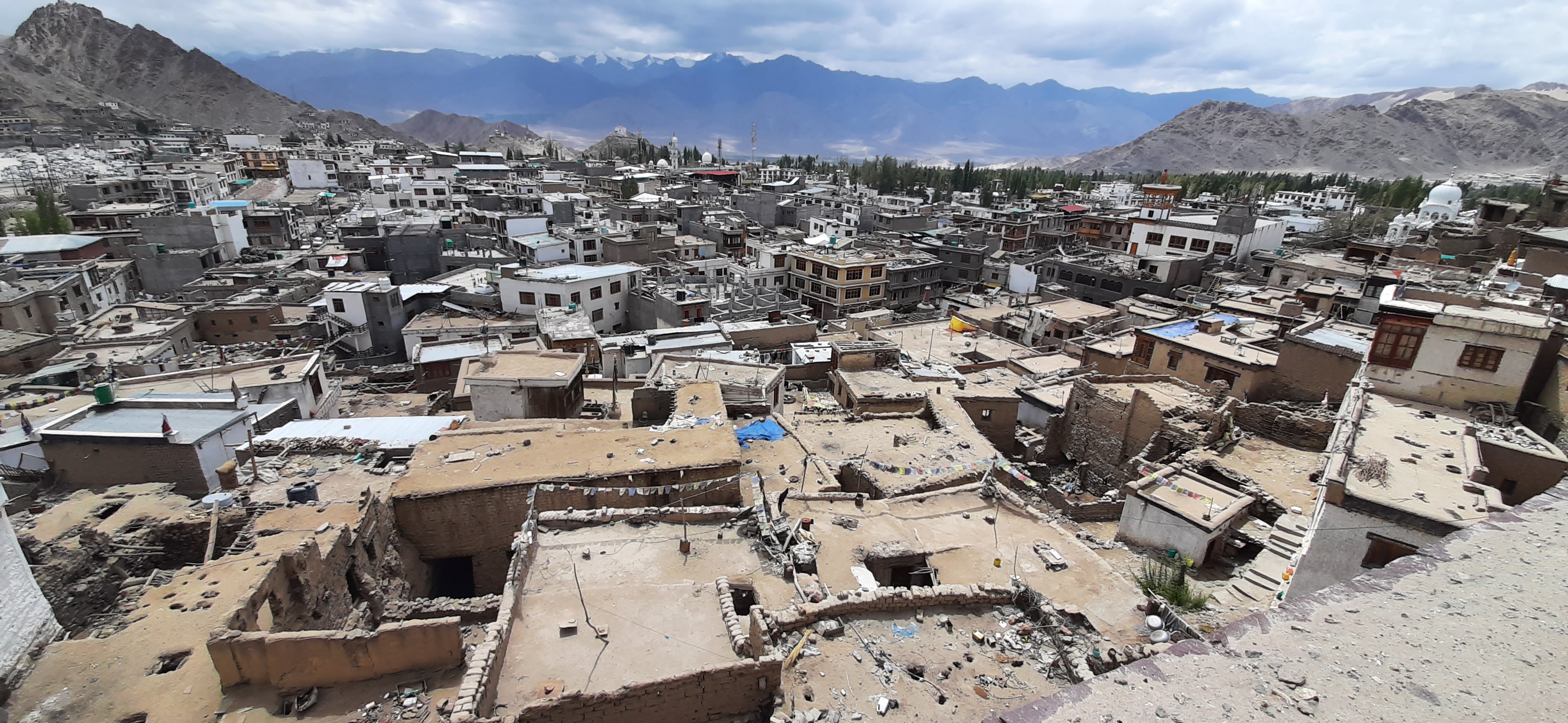
As many historic cities, Leh also has its Old town, which labyrinth of narrow streets is more than worth the visit to get to know the heart of the city better.
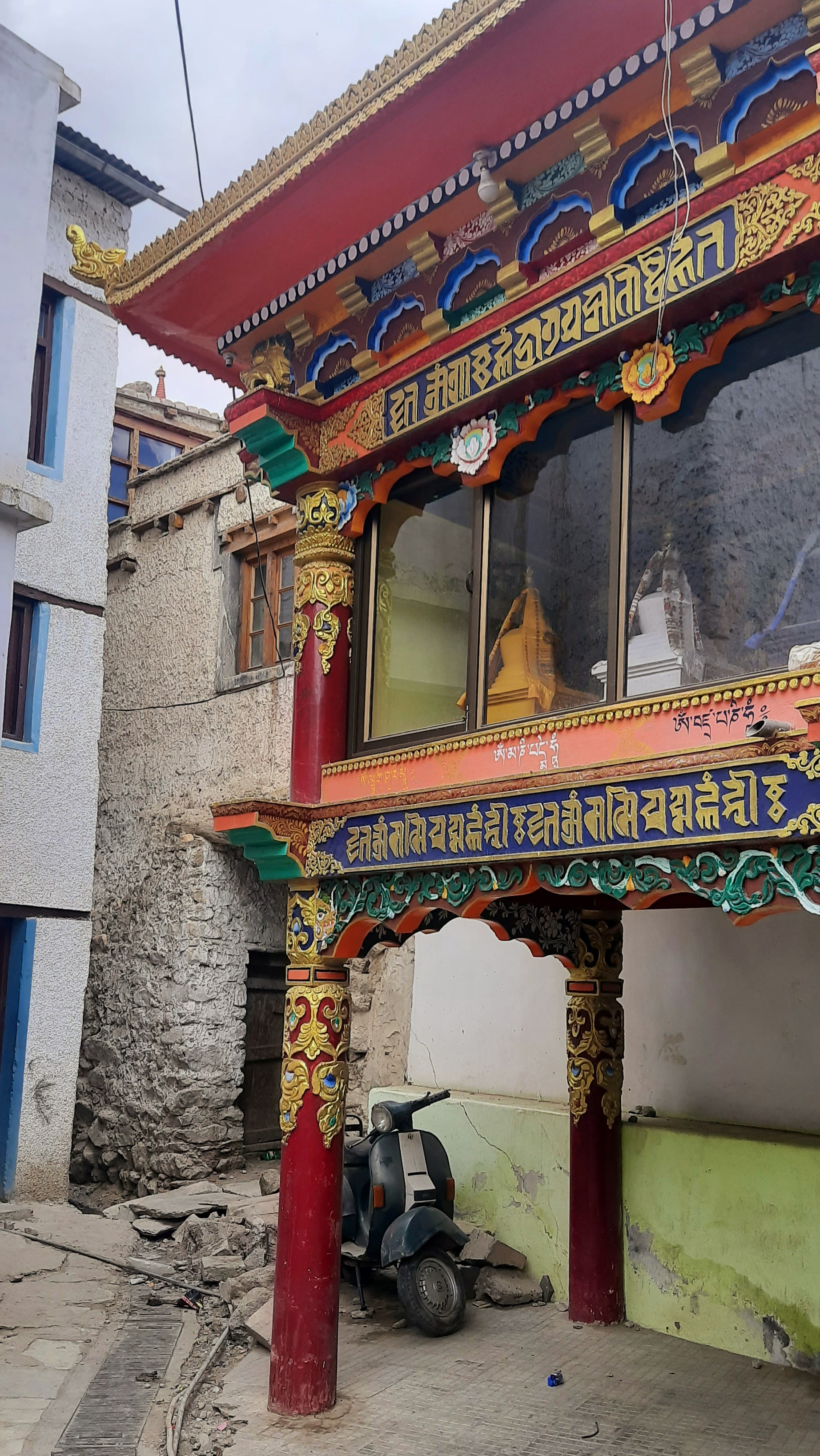
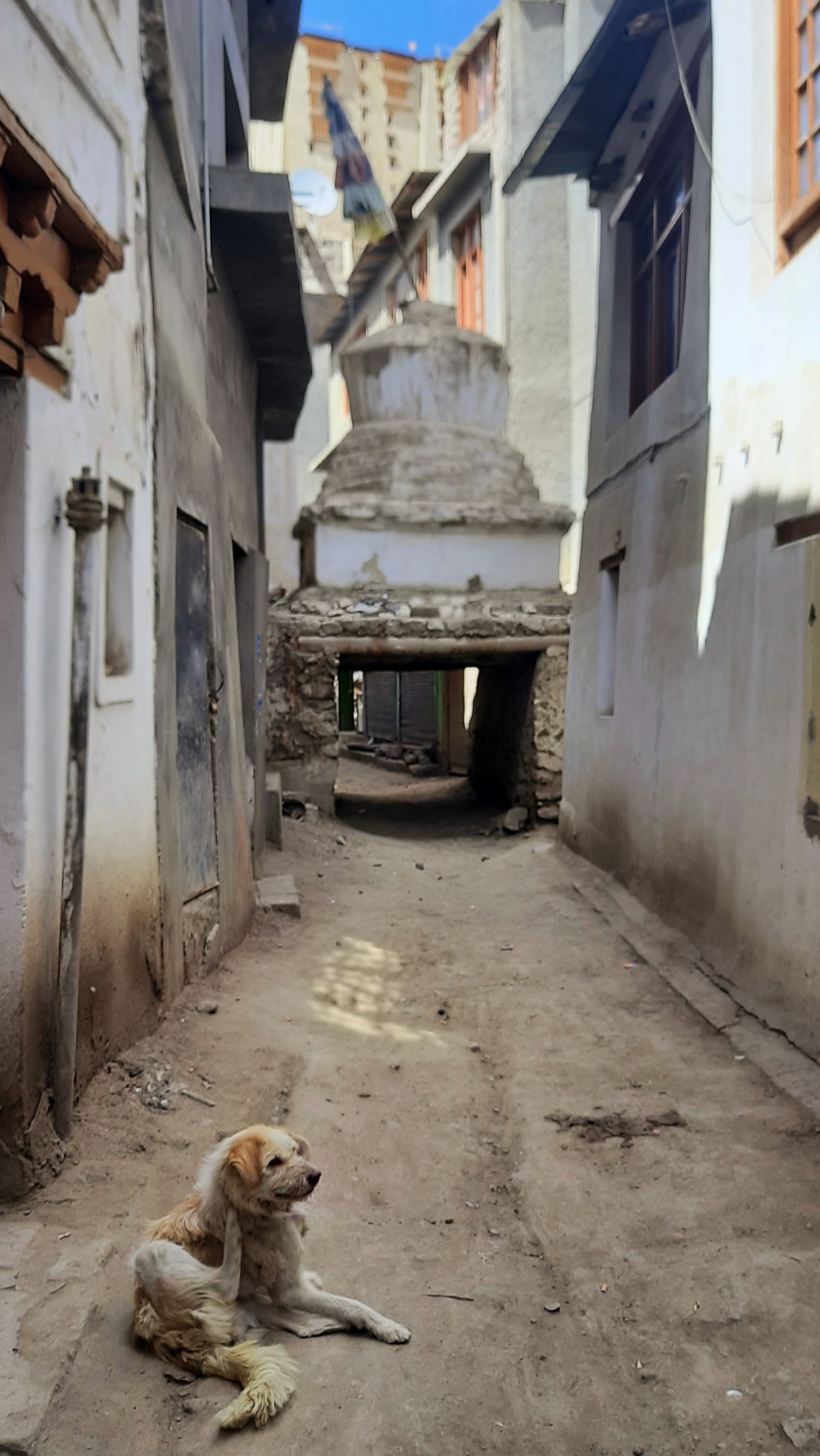
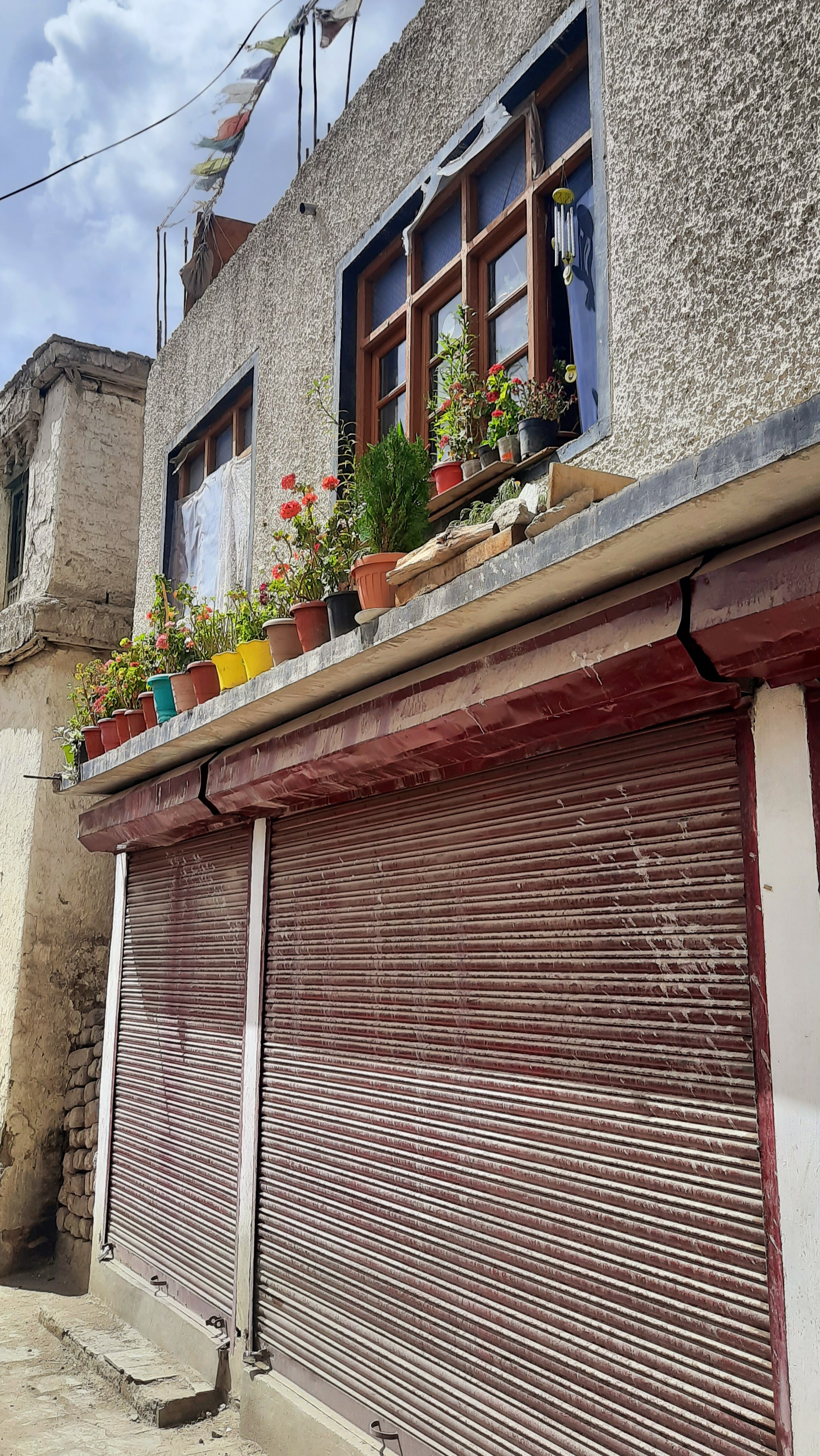
This part of the city is also named Kharyog (khar meaning ‘palace’ and yog ‘below’ in Ladakhi), as it is situated below the Leh Palace.
The exact date of establishment is not known by historians, but many agree that a small settlement already existed a long time before the origin of the palace.
Reading about the Old Town back in its glory days
“The palace and its royal residents gave the town prominence and it grew as a prosperous cultural and trading destination.

Large houses came up below the palace along the south-facing hill where their owners were bestowed land by a royal decree, living there by virtue of their association with the king.

Below this settlement developed several important spaces - areas for commercial activity such as the 'Main Bazaar street'; administrative centres and places of worship such as the 'Maitreya temples' and 'Jama Masjid'.

Connected by a labyrinth of narrow, winding pathways, the area was surrounded by a wall with five gates.”
(Source: Sahapedia.org)
Decayed city wall & heritage buildings
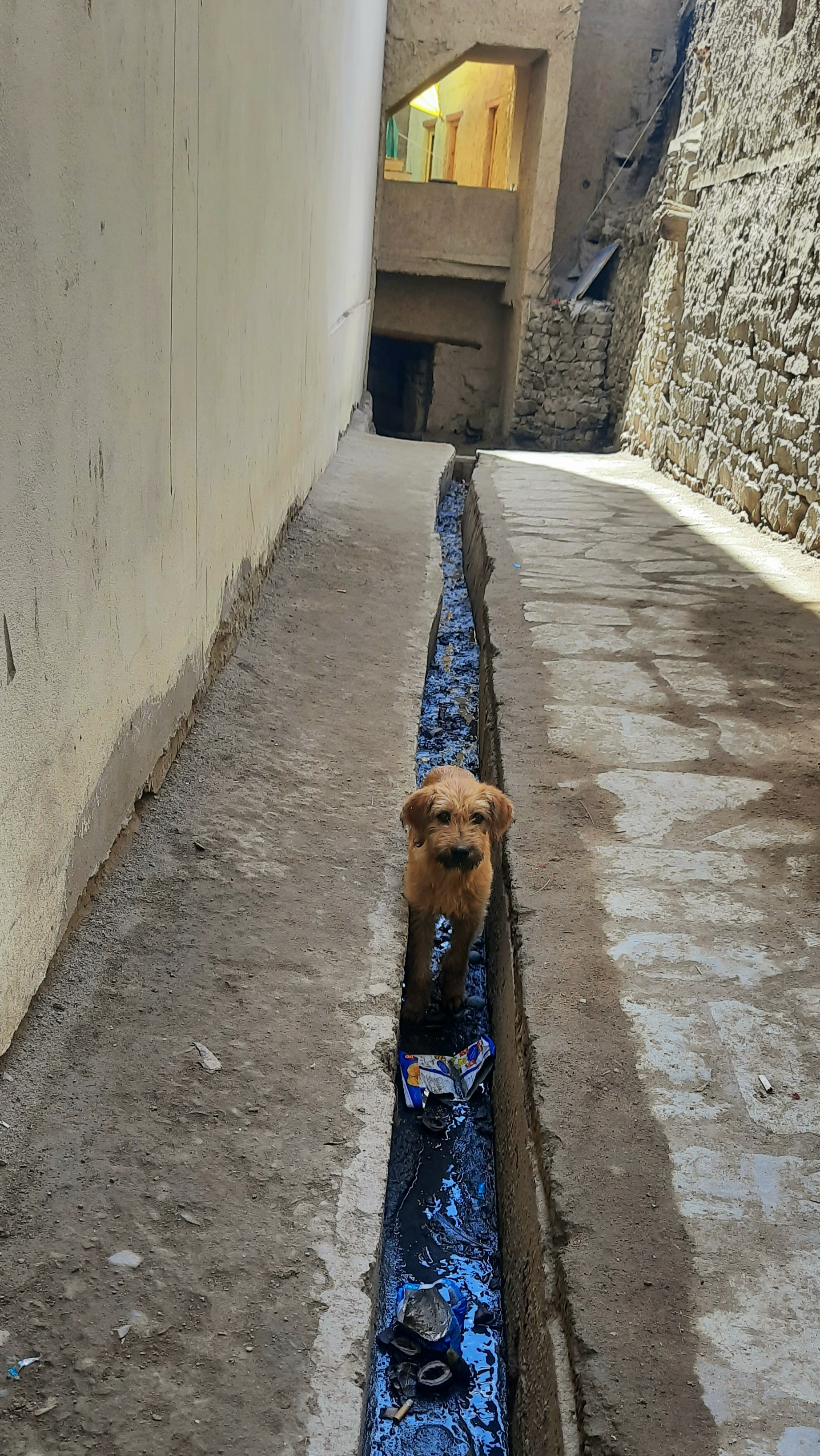
The main protective wall mentioned in the text above has almost entirely disappeared, except for minimal parts hidden in the narrow alleyways.
You do still find around 200 residential buildings, as well as many Buddhist gompas and mosques. This is due to the fact that the old town was home to the king’s ministers and key officials.
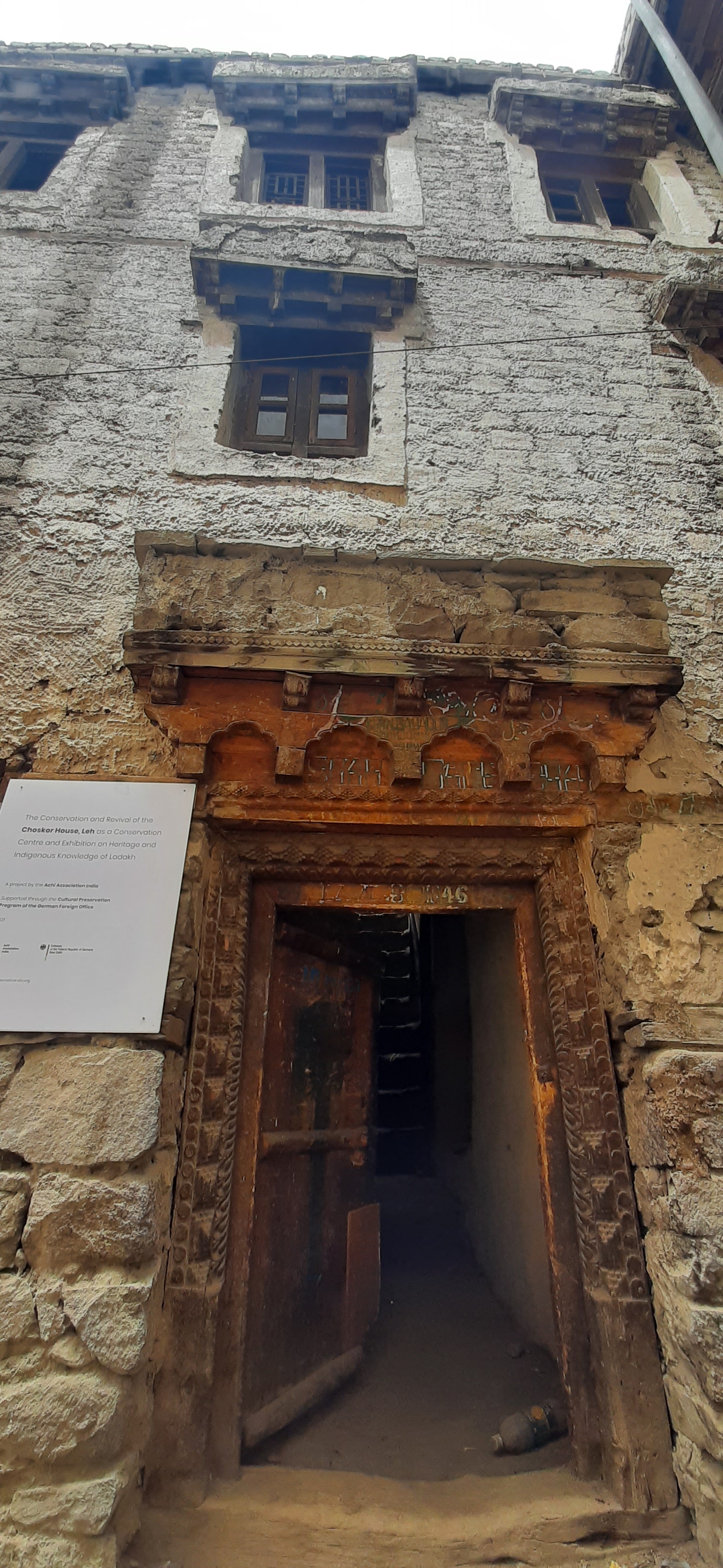
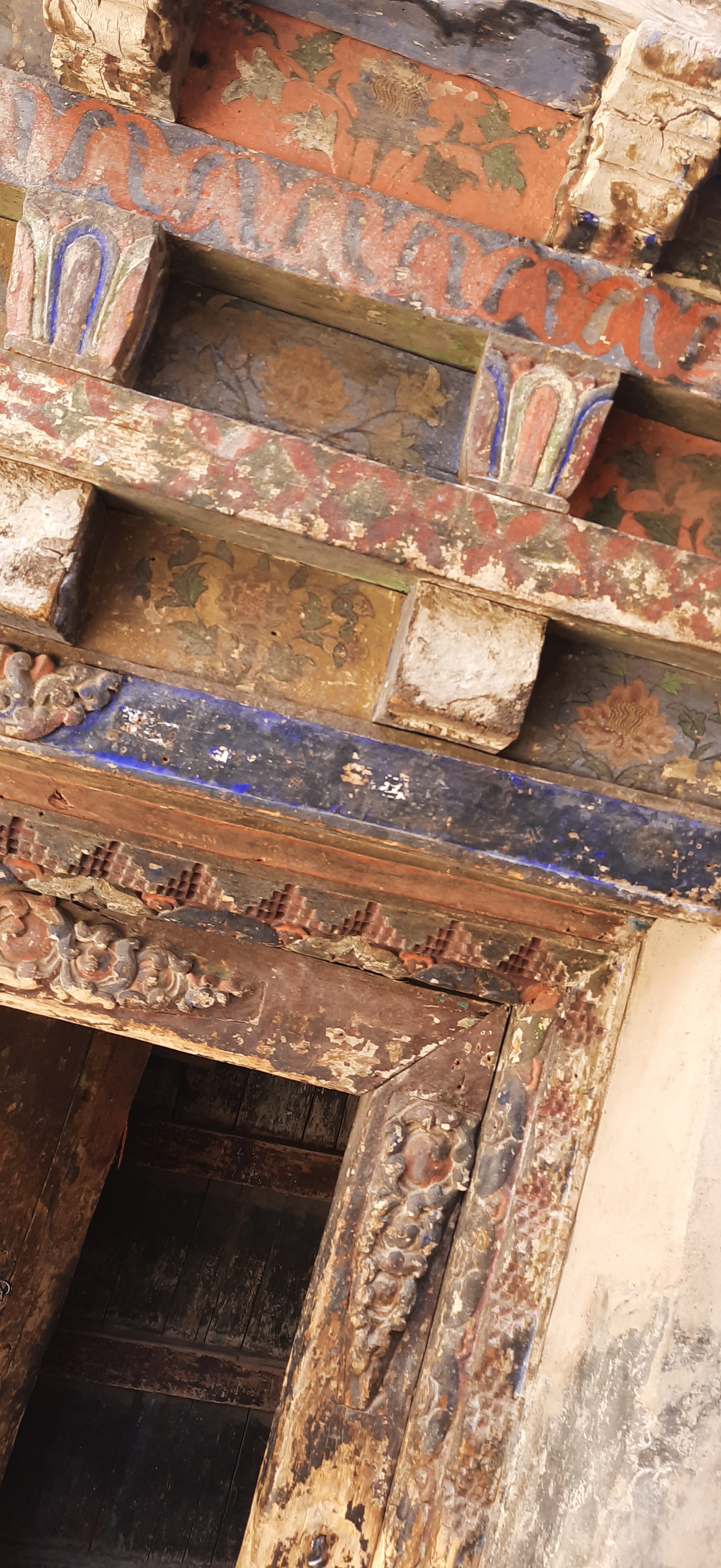
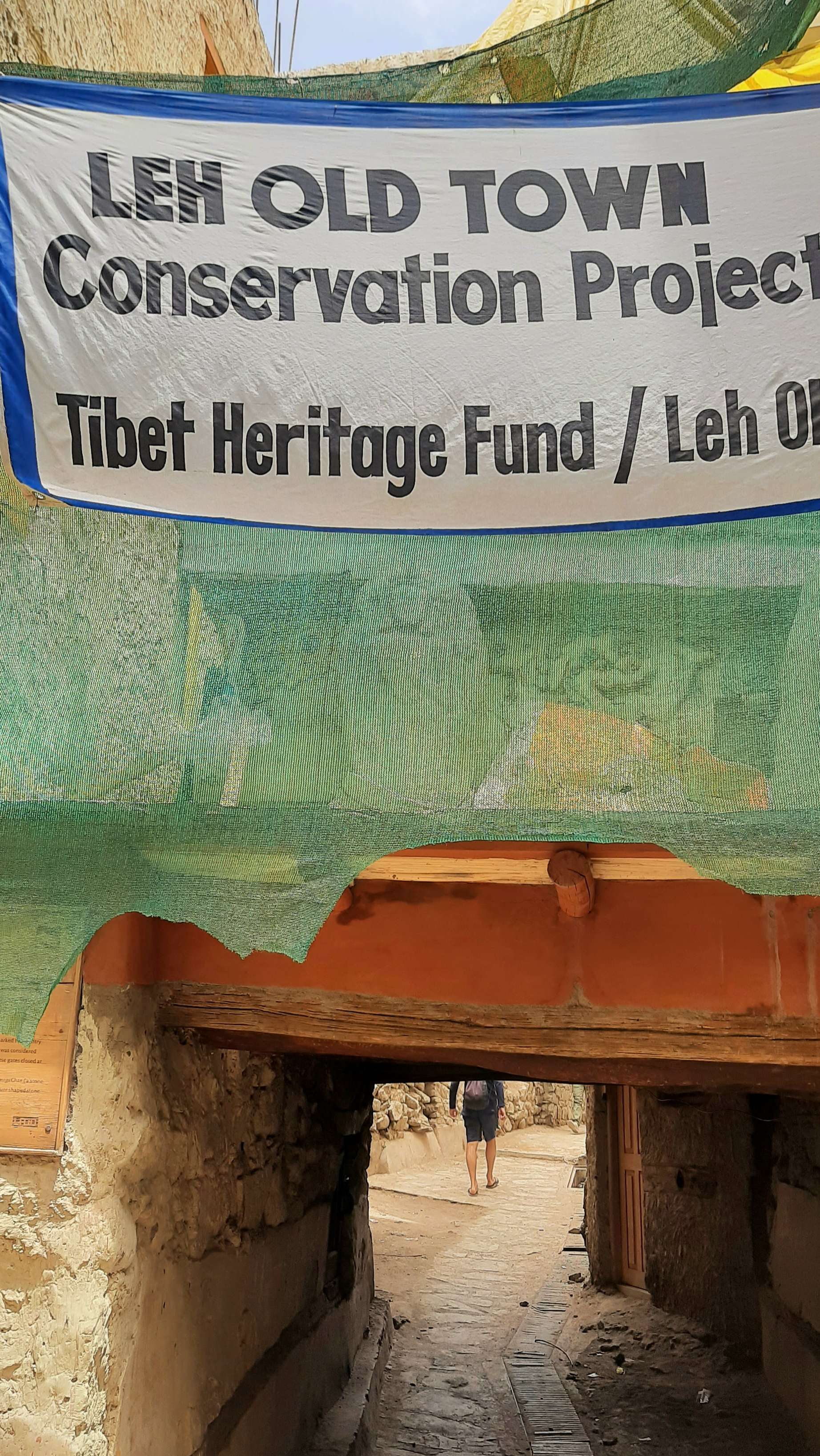
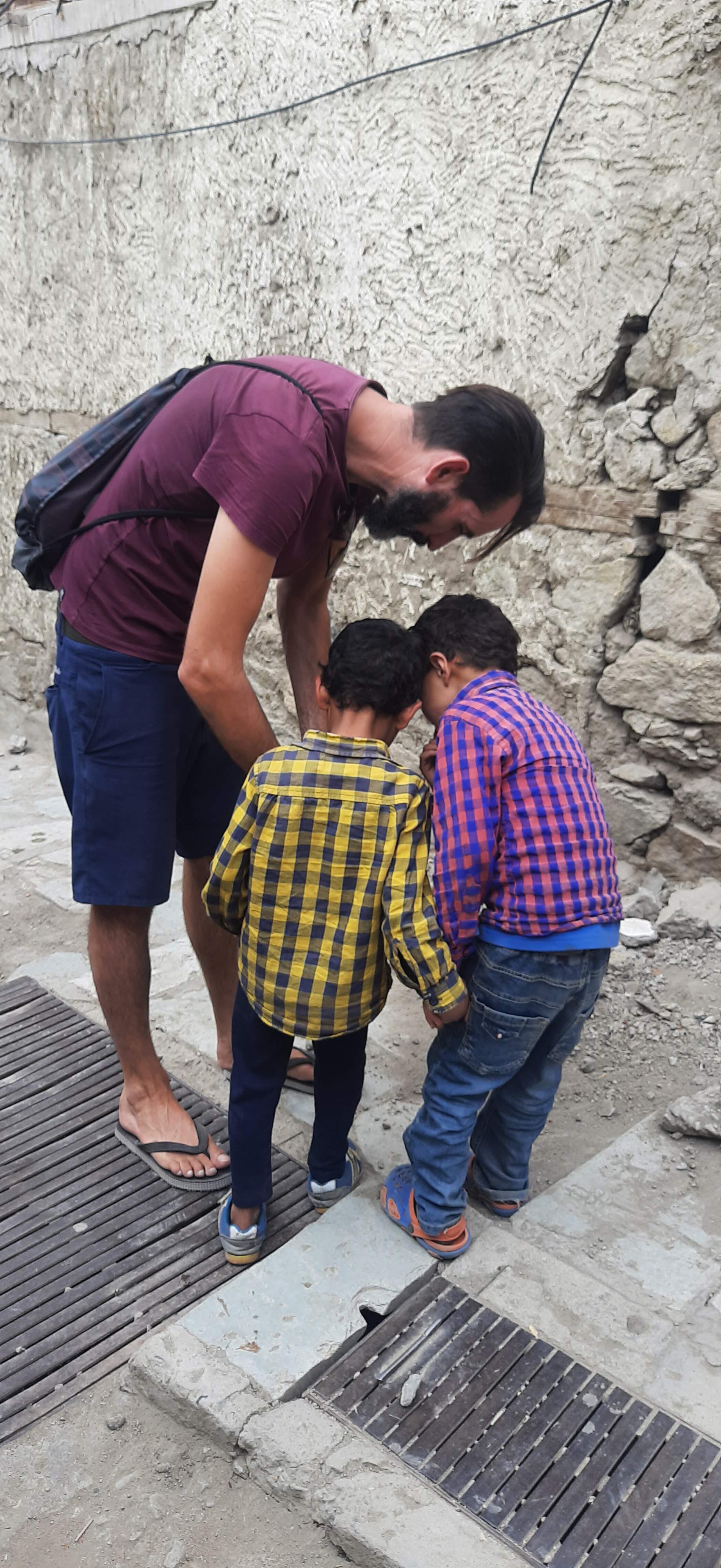
We read that a few families still live in their ancestral homes in the area. When you walk around, you also see signs with a description of their functions.
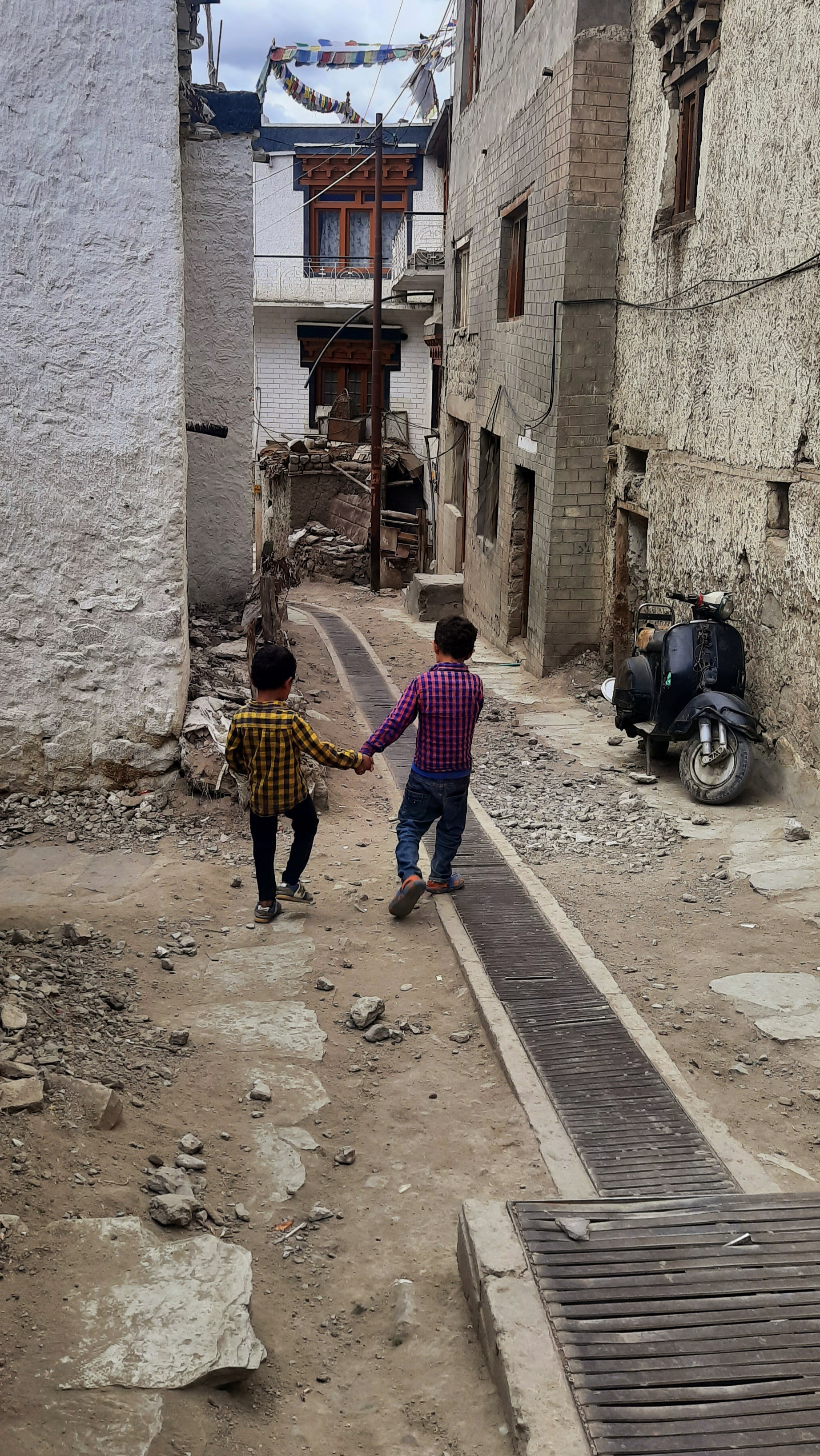
Coming out of a time machine
“Entering the west entrance gate is like entering a time machine that takes you back in the past.

The walk through the narrow alleys is both awe-inspiring and beautiful as you pass through centuries-old heritage buildings, mosques and gompas.

Each building in the dilapidated state [...] has numerous stories to share with you.”

(Source: Jul-leyadventure.com)
Bakers’ street, its old flour mill & even older tree
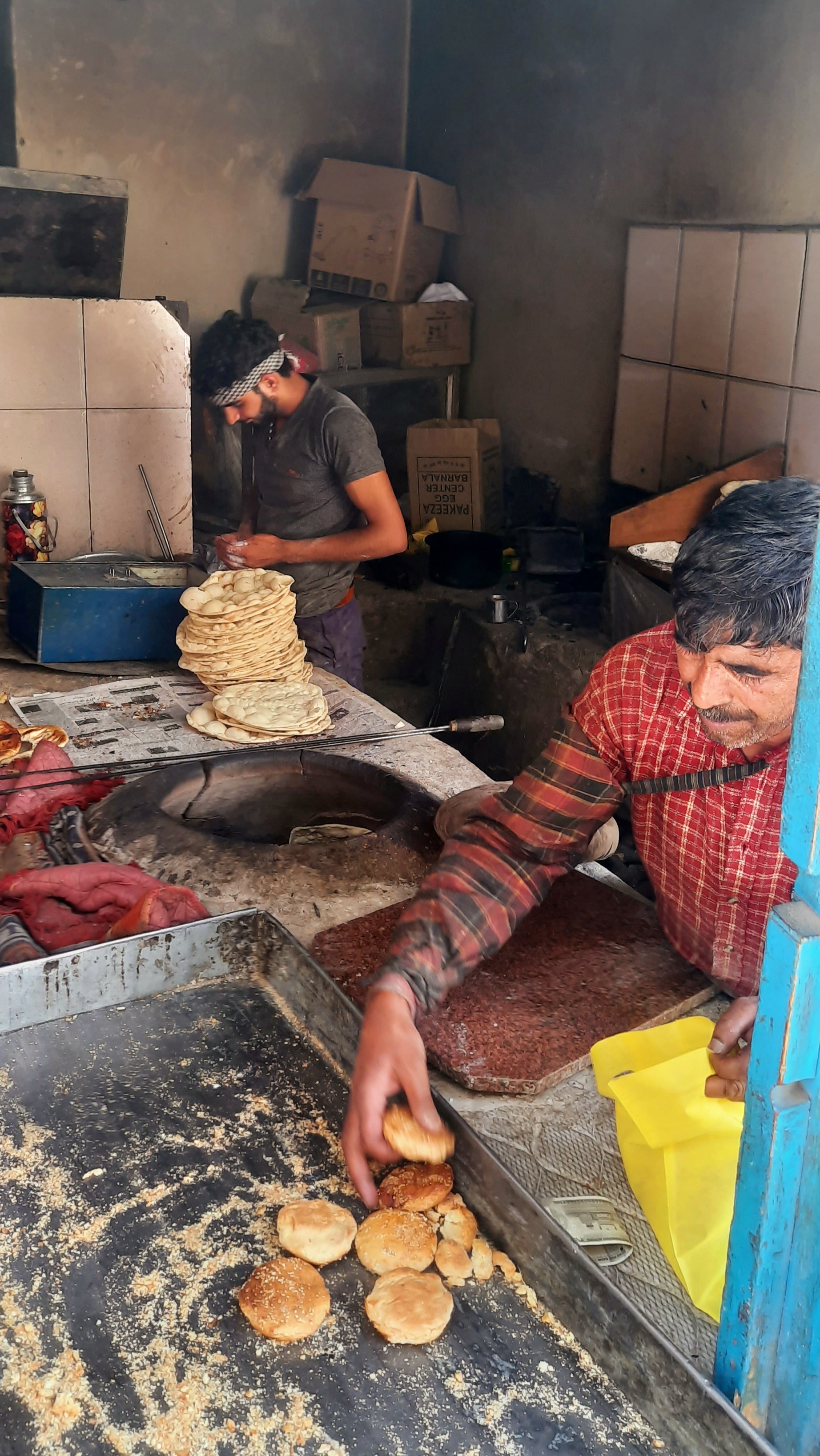
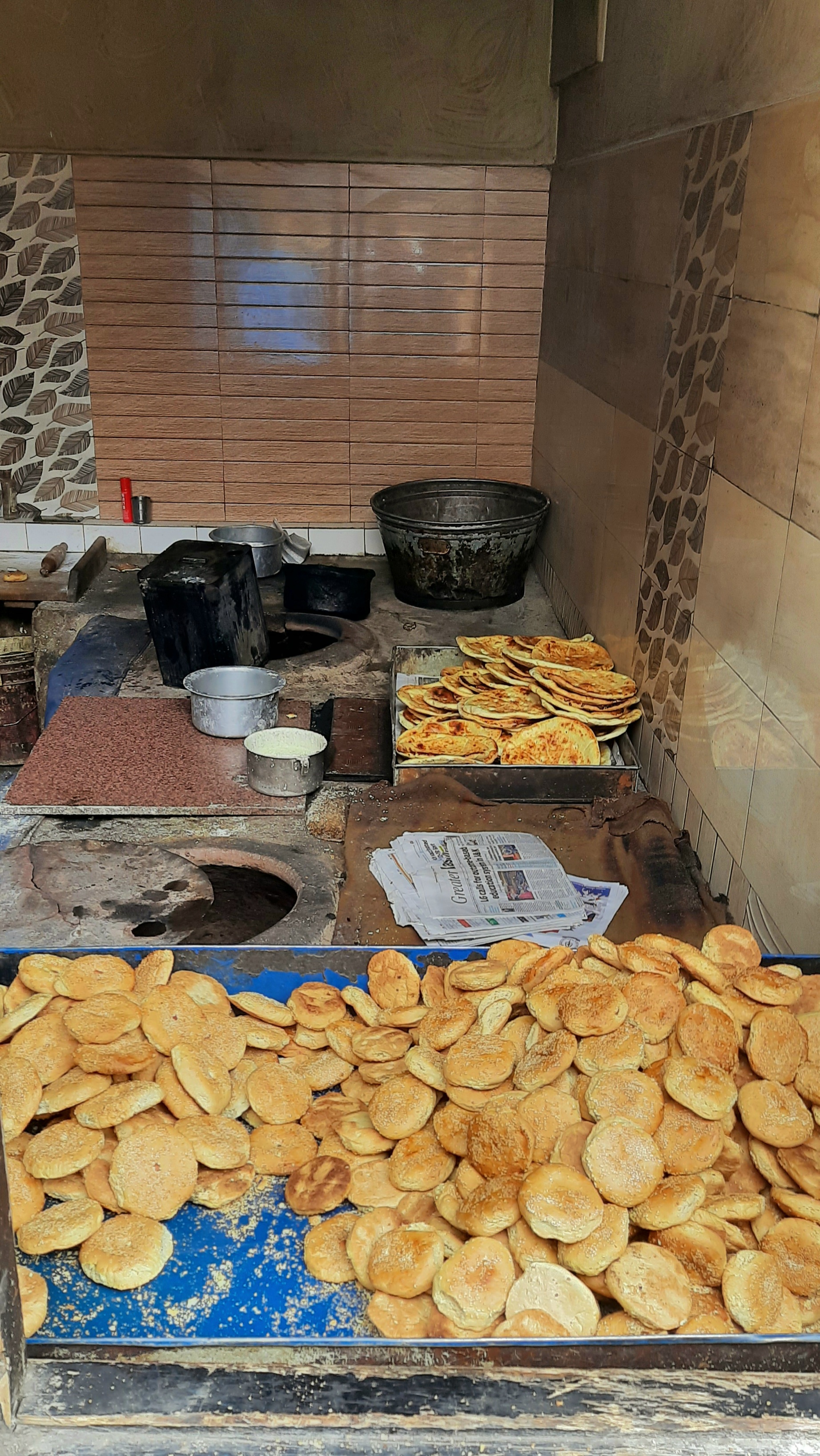
In the Old Town area you also find the apparently famous Muslim bakers’ street, where you can buy tasty bread straight from the oven. This street is near the 17-th century Chutay Rantak, a flour mill used by the people of Leh until recently to grind flour from roasted barley.
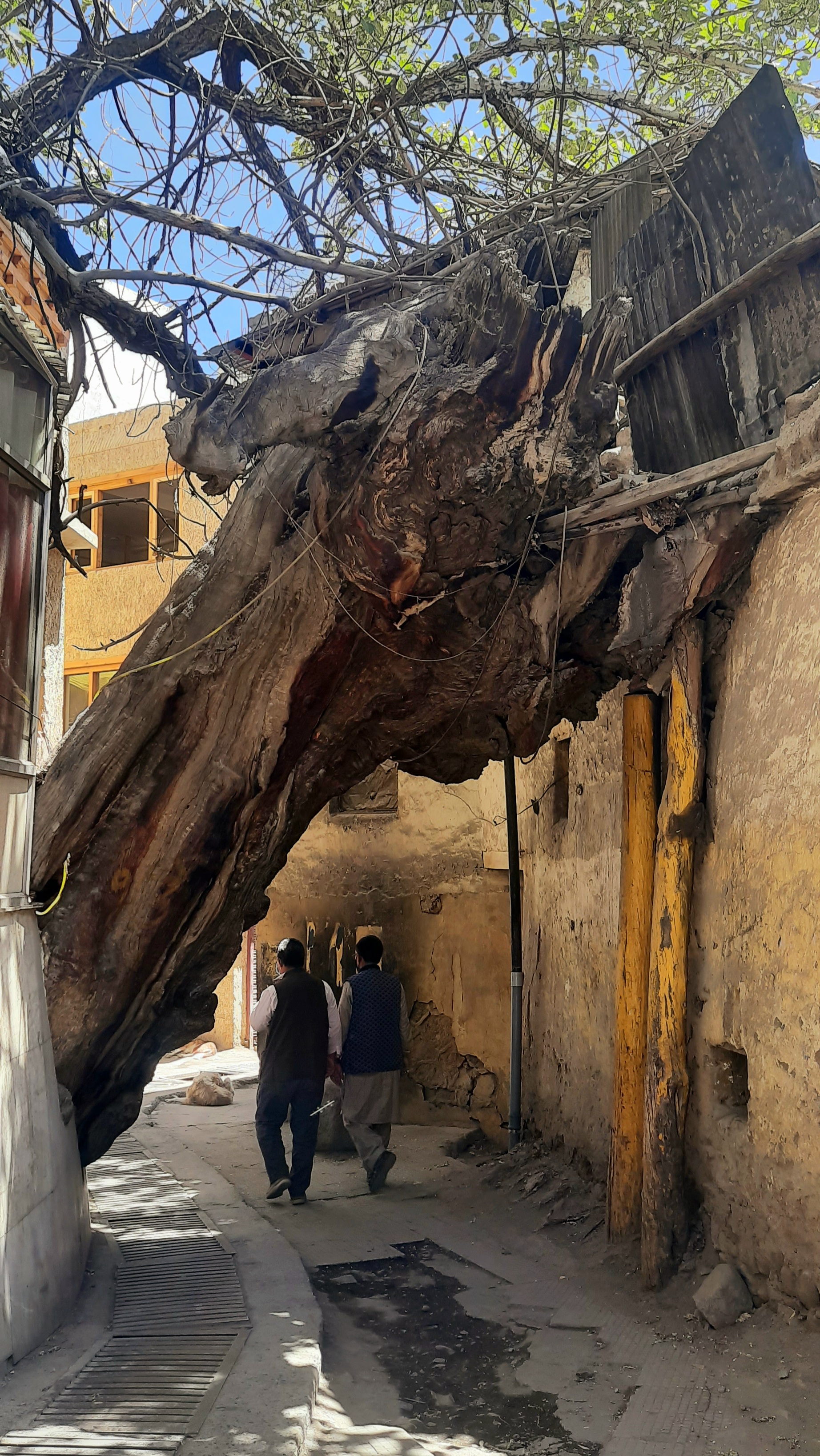
Another remarkable item in this small street is the four-century-old tree Gtsug Tor, named after a local deity. Legend has it that Lama Stagtsang Raspa, founder of the Hemis gompa, planted the tree. Nowadays the Sikh community is maintaining the tree and it’s known as Datun Sahib or ‘the toothbrush of Sikh teacher Guru Nanak’.
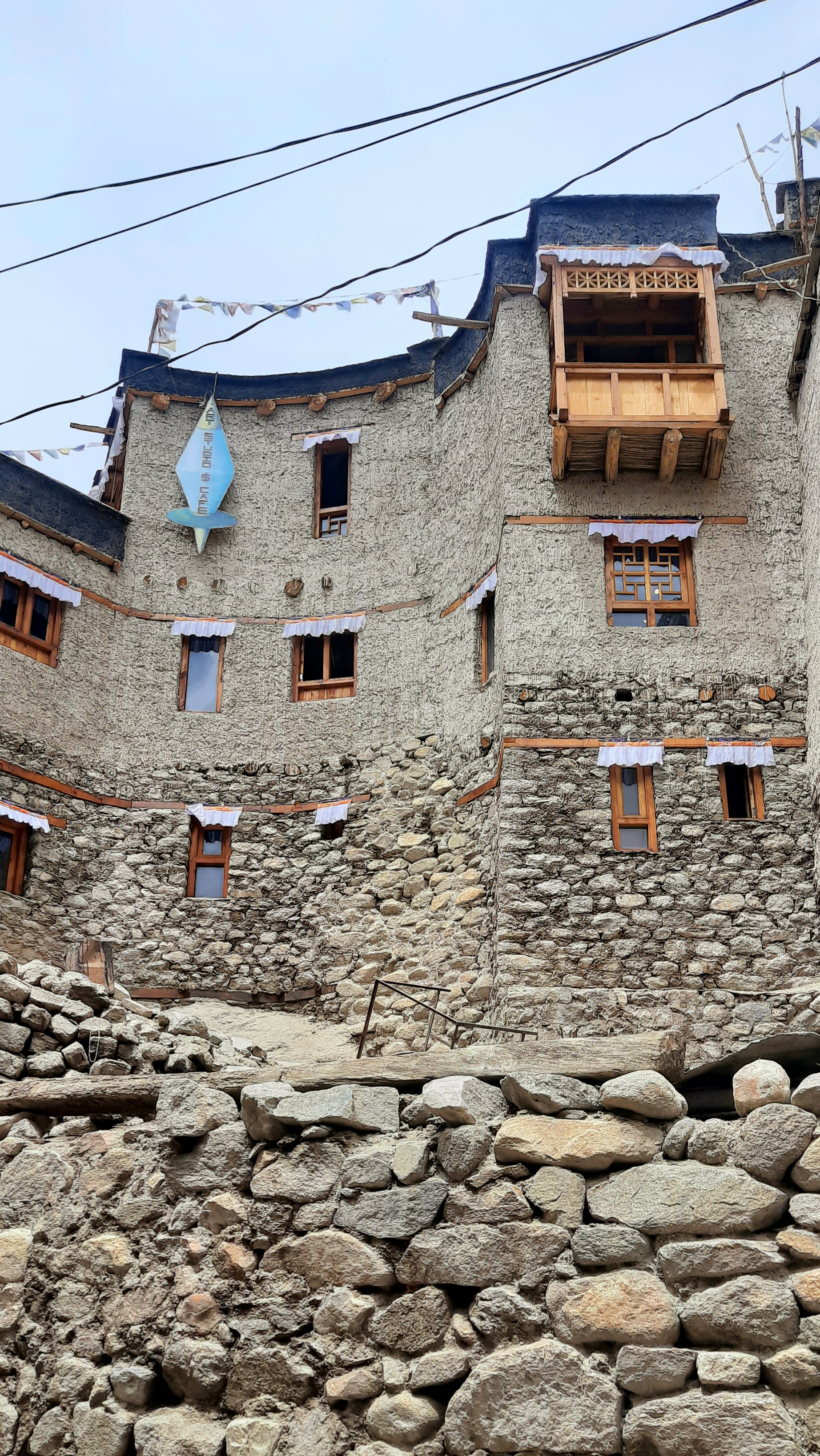

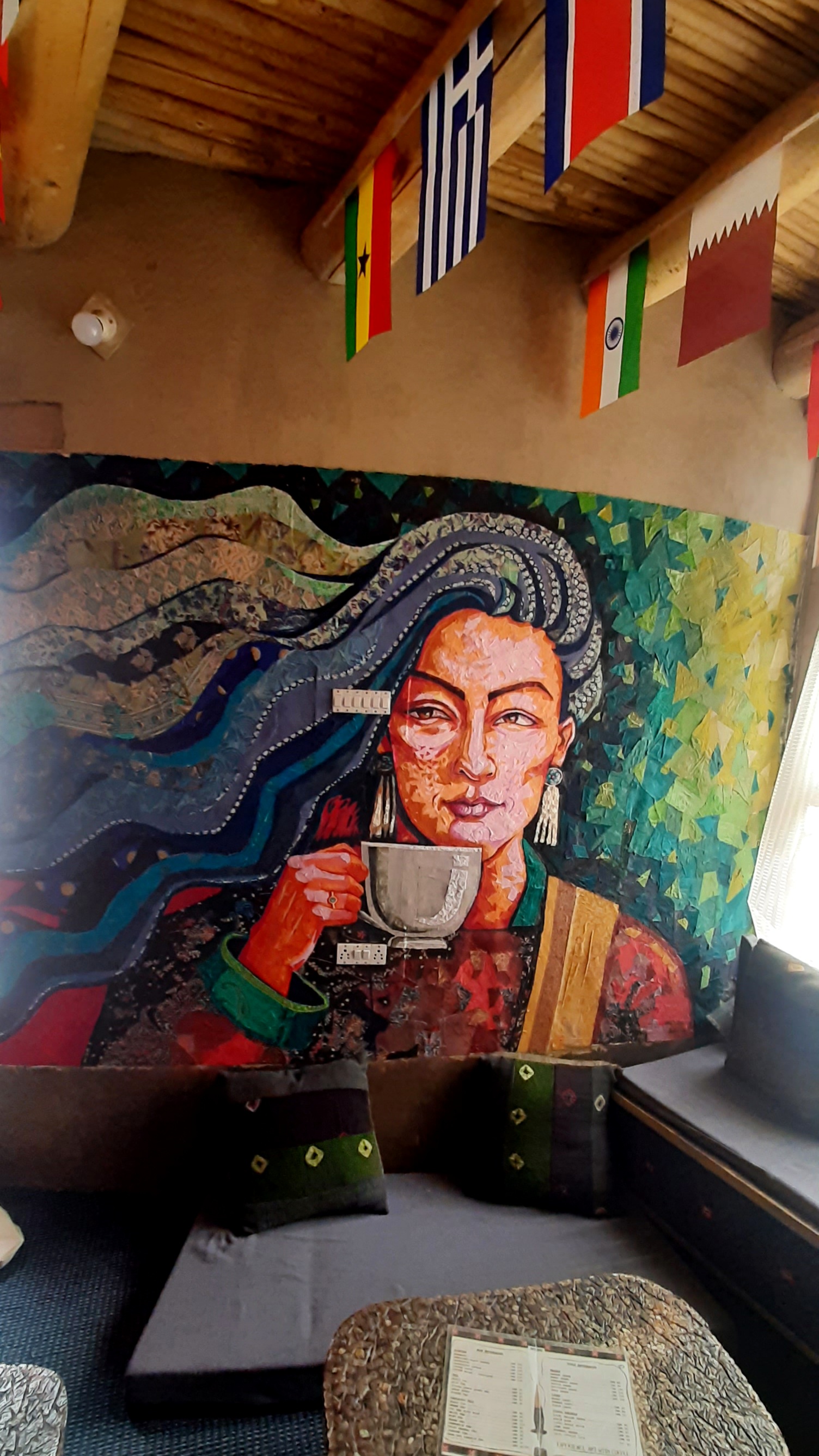
In the middle of the area we also found this small art gallery and cafe, with artworks of 2 young Ladakhi artists. Later you can read more about the gallery.
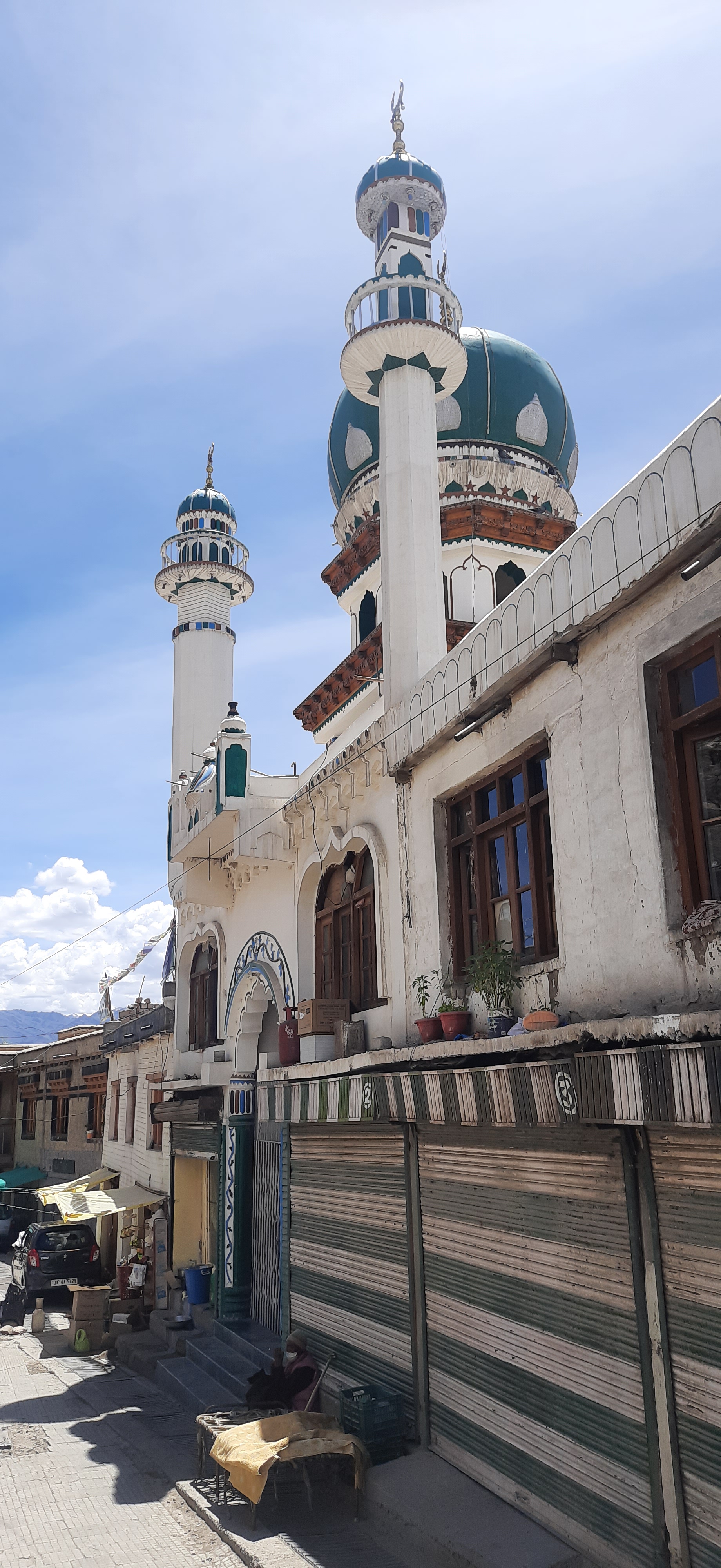
The old town area is also famous for Jama Masjid, the mosque that is built at the entrance of Maney Khang, the main gateway into the Old Town Leh.
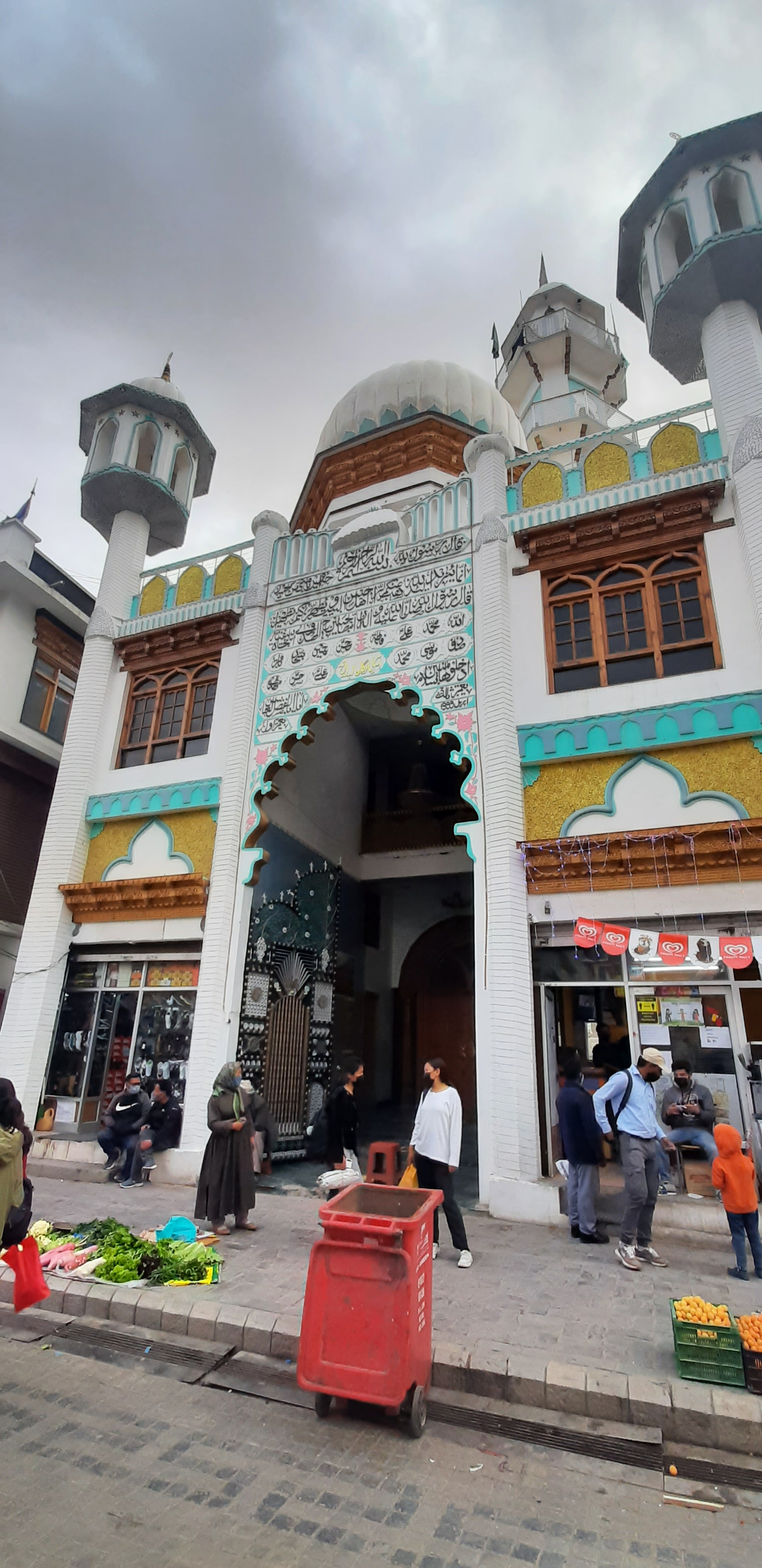
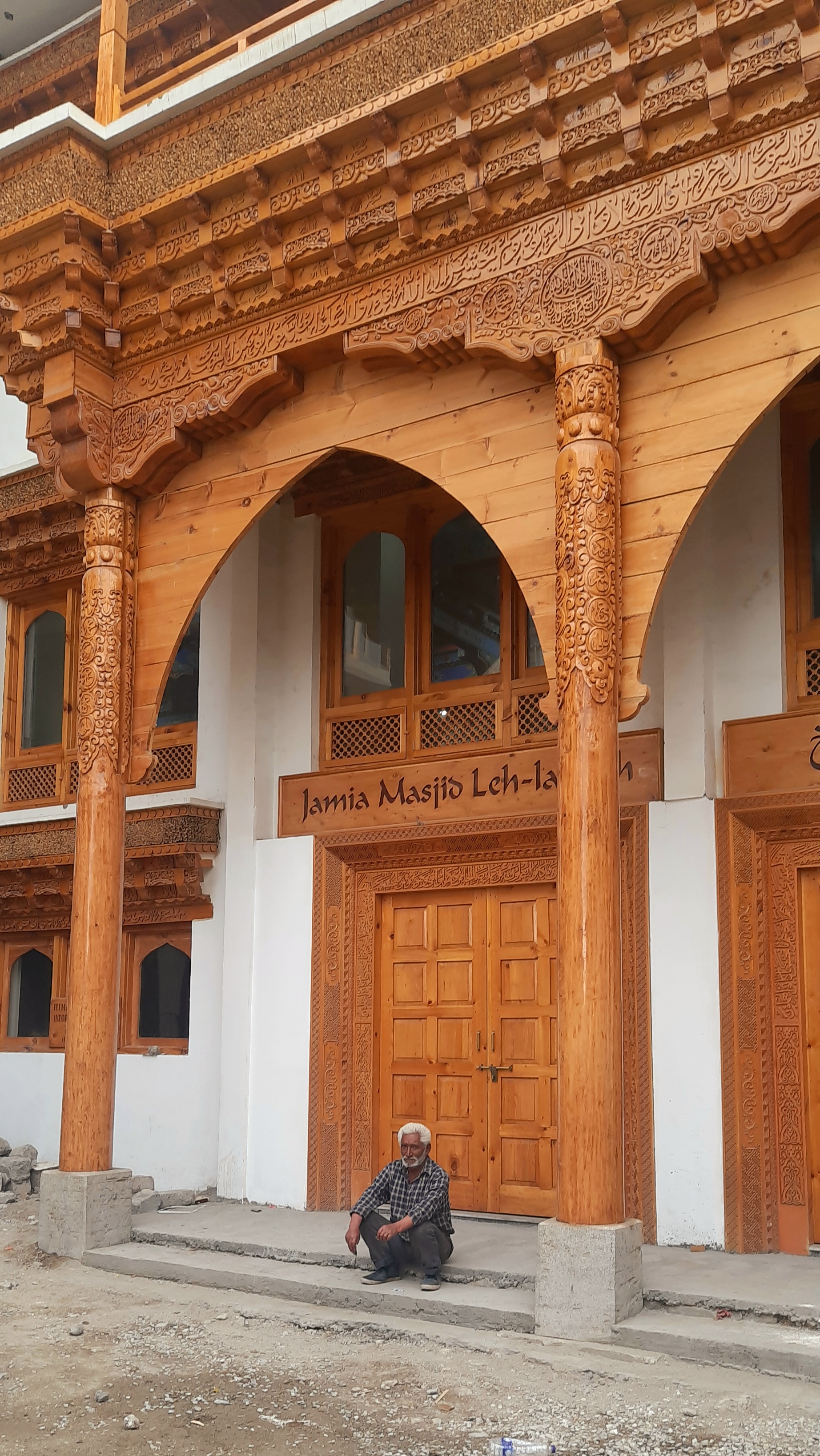
The old & new part of the Jama Masjid mosque
Endangered heritage
Unfortunately, in 2007 the Old Town of Leh has been added to the World Monuments Fund’s list of 100 endangered sites. This New York-based watch list that is announced every two years to call international attention to “cultural heritage sites around the world threatened by neglect, vandalism, armed conflict, challenges or natural disaster”.
Leh is mentioned due to the increased rainfall from climate. It’s also because of the rapid and poorly planned urbanisation of Leh, which has led to an increased risk of flash floods in some areas.
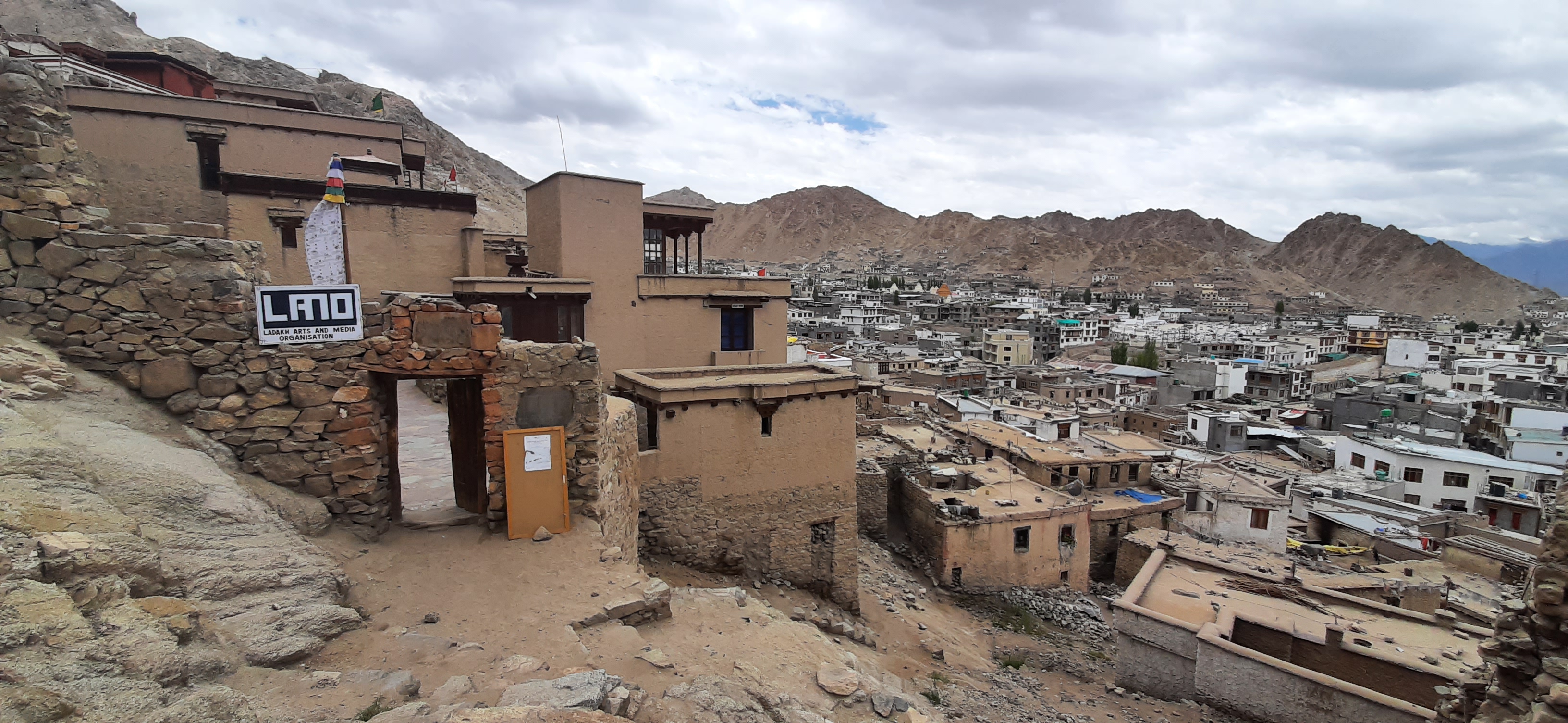
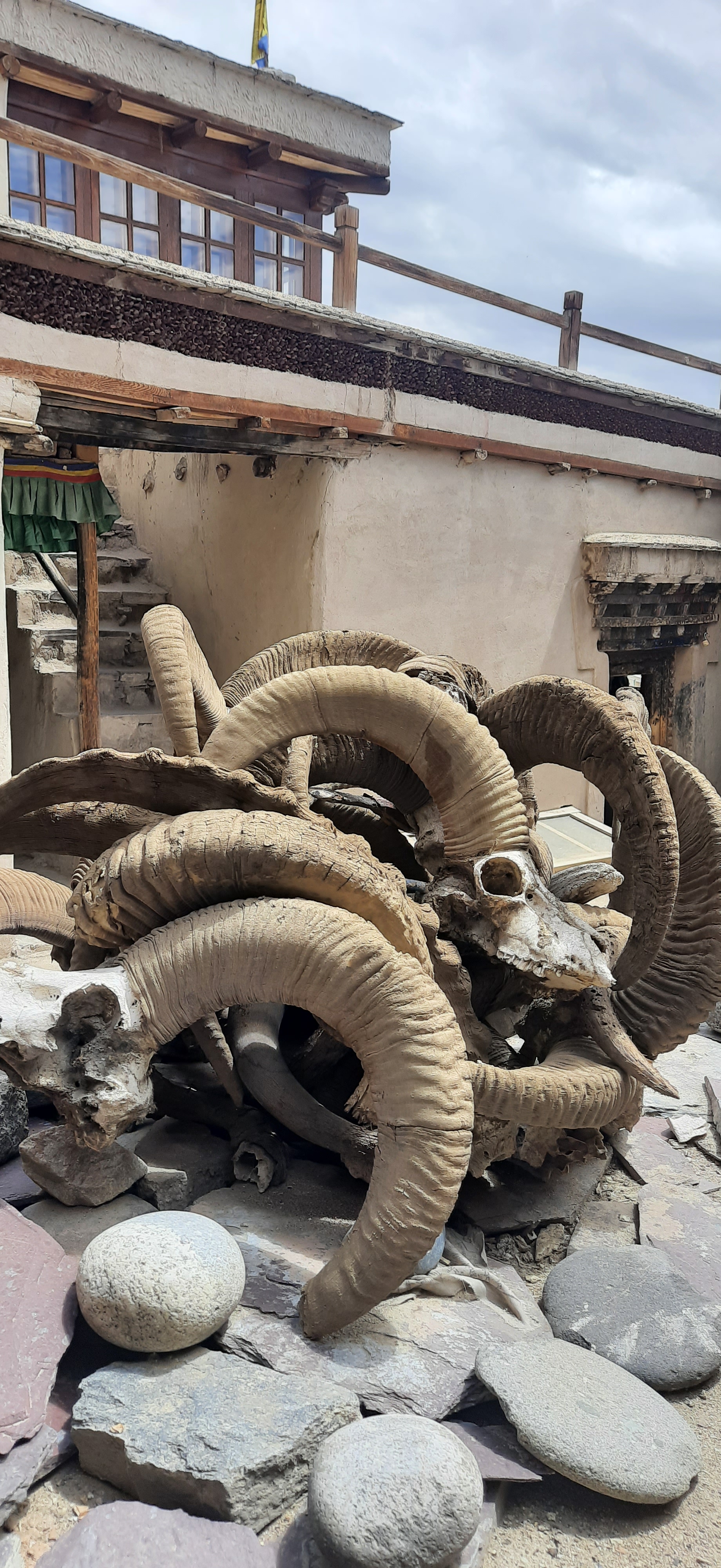
Go to LAMO If you want to see and read more about the history of Leh, make sure you visit LAMO. This trust - The Ladakh Arts and Media Organisation - helps articulating 'an alternative vision for the arts and media in Ladakh'.You find the organisation right beneath the Leh Palace, and the complex comprises 2 historical houses below from the 17th century.
These houses were restored by LAMO and converted into an art space, office, a library and conference room, and an open-air performance site. So lots of history within history you'll find here.

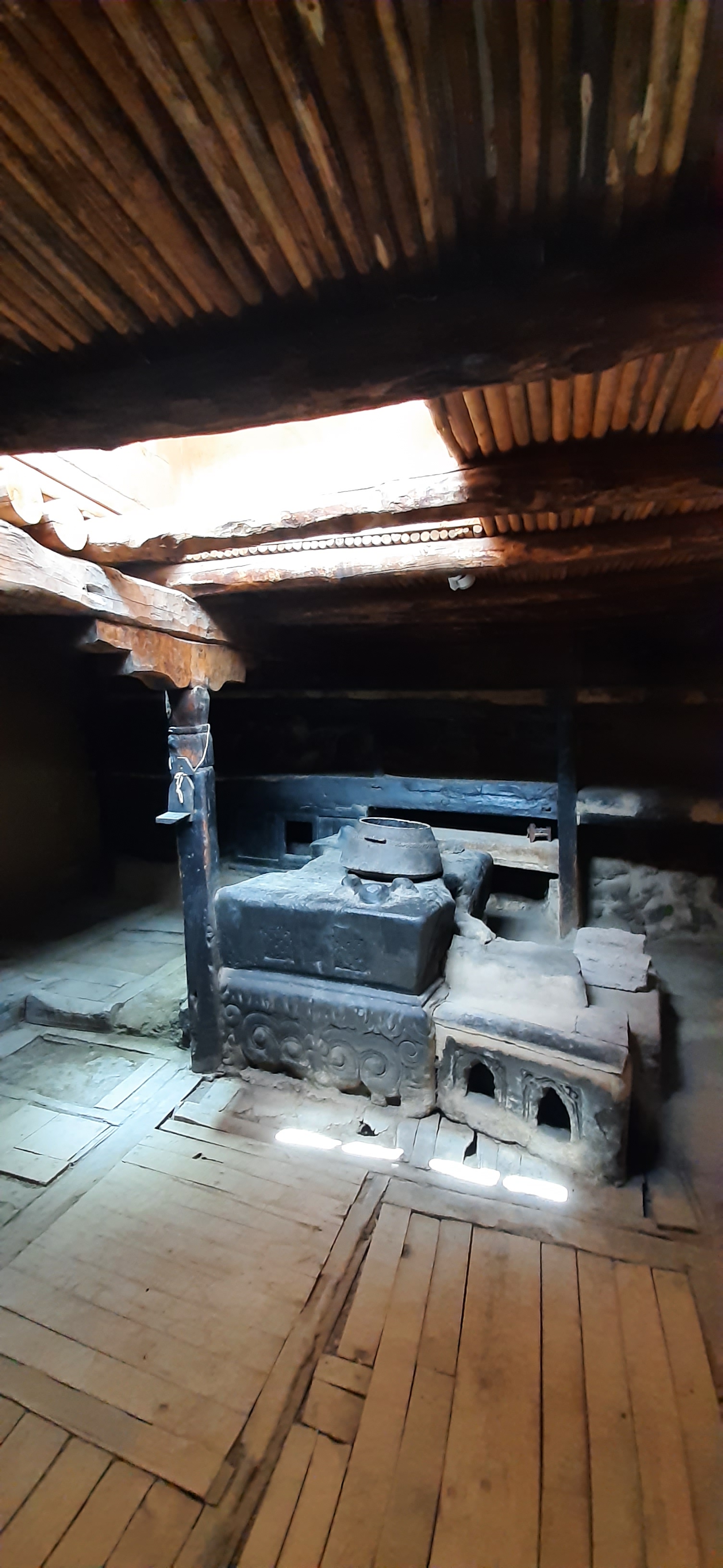
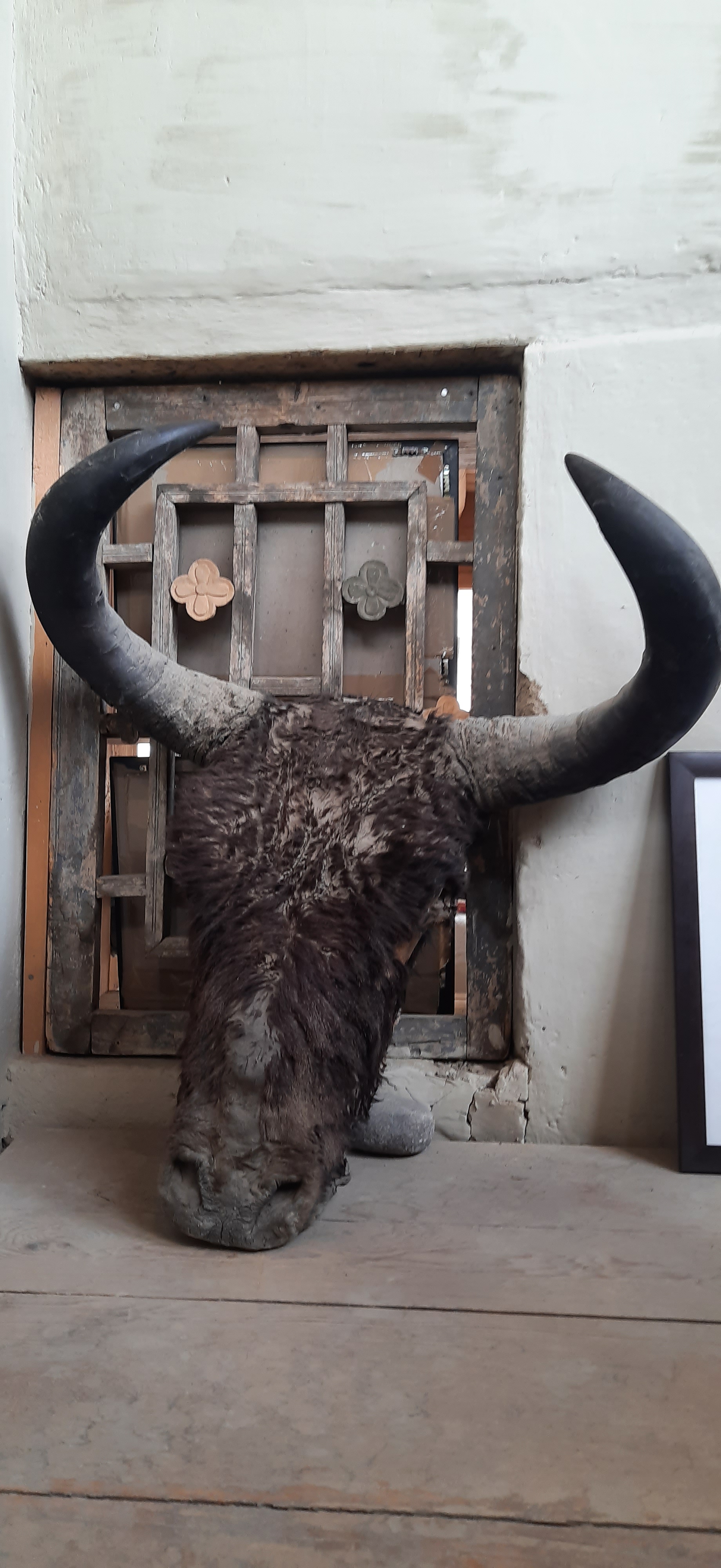
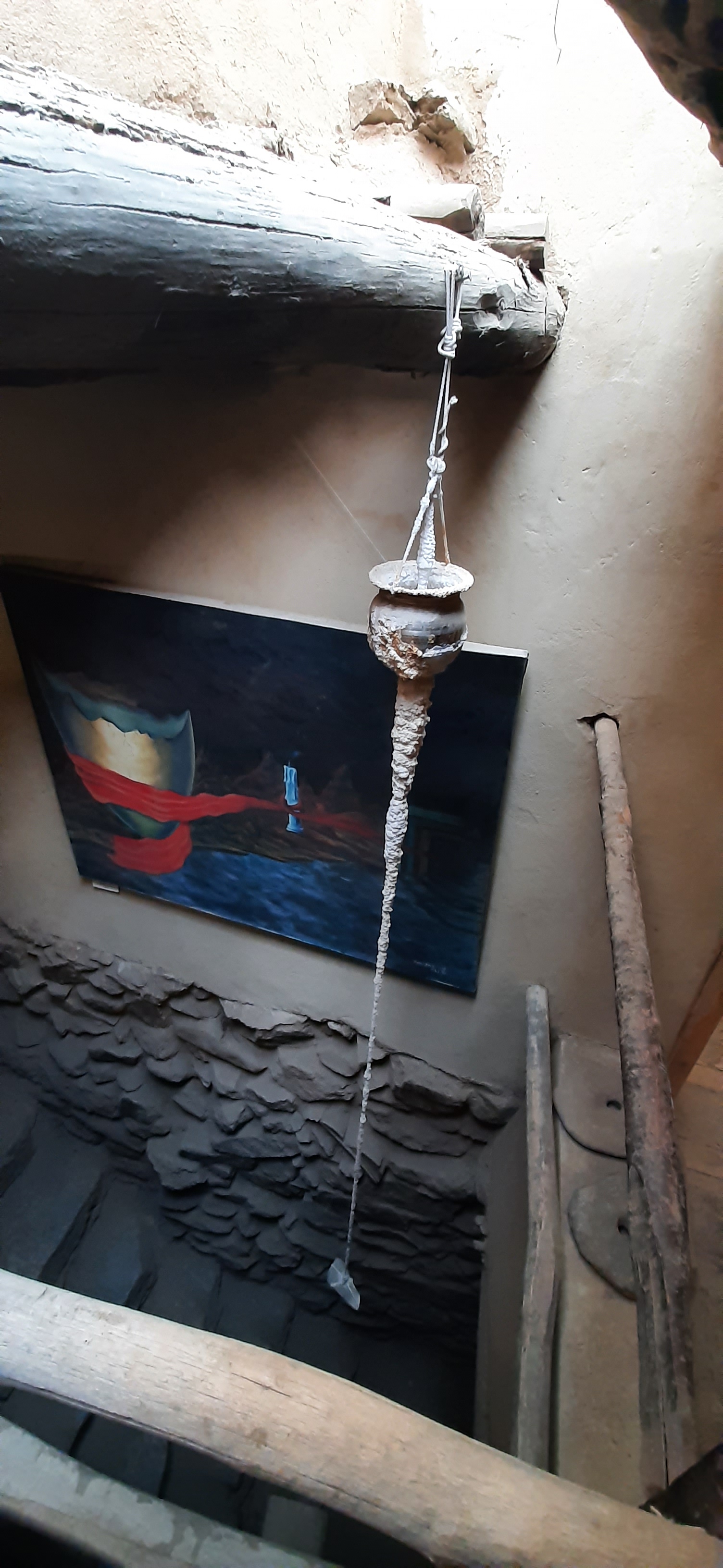
(Sources: Jul-leyadventure.com, Sahapedia.org, a.o.; if you want to learn more about Leh, or if you want to plan a heritage walk through the city, please check these, very informative websites!)
9 tips to see in Leh Old Town – shortlist to screenshot
- When in Leh Old Town (or Kharyog):
- discover the last parts of the former city wall, residential buildings & Buddhist gompas.
- visit Muslim bakers street for fresh bread, to see the 17-th century Chutay Rantak flour mill, four-century old Gtsug Tor tree.
- check out young talent at the Art Gallery in the middle of the Old Town.
- admire the architecture of the Jama Mashid Mosque.
- To learn more about the history of the town, go to the Ladakh Arts and Media Organisation (LAMO), a charitable trust expressing the vision for the arts and media in Ladakh. And want to learn even more? Book a 2 hour city heritage walk through them.
Tips @Breuhuys
Leh, Ladakh 194104, India
 Breuhuys
One Reply to “”